

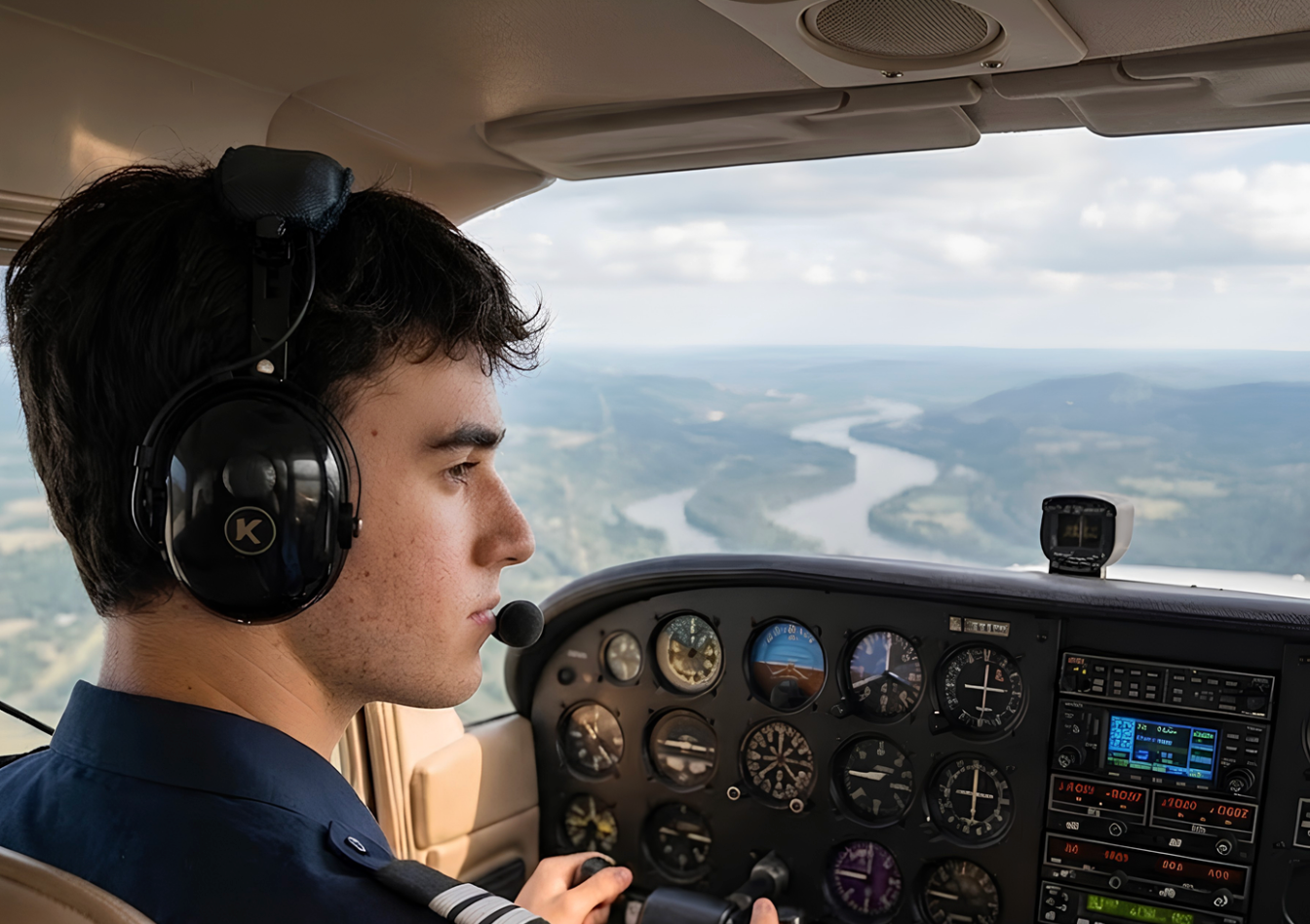
KORE Aviation - The question every new student pilot asks is some version of: "Do I really need to spend $1,000 on a headset?" The short answer is no. The longer answer is that the right aviation headset price for you depends on how often you plan to fly, how far you want to take your training, and what you actually need from a headset on day one.
Aviation headset prices cover a surprisingly wide range. You can get airborne for under $100, or you can spend well over $1,000 on a premium unit. Both will let you talk to ATC and hear your instructor. What changes as the aviation headset cost goes up is noise reduction quality, comfort over longer flights, and features like Bluetooth connectivity or lighter materials.
This guide breaks down what the aviation headset market looks like in 2026, what you actually get at each price tier, and how to figure out the right budget for your situation as a student pilot.
What Does an Aviation Headset Actually Cost?
Before diving into specifics, here is a broad overview of the five price tiers you will find when shopping for a flight training headset:
| Tier | Price Range | Technology | Best For |
|---|---|---|---|
| Entry level | $90 to $200 | PNR (passive) | Budget-conscious students, first-time buyers |
| Mid range | $200 to $400 | PNR (passive) | Most student pilots, committed first-time buyers |
| Budget ANR | $400 to $700 | ANR (active) | Frequent flyers wanting noise cancellation |
| Premium ANR | $700 to $1,100 | ANR (active) | Career pilots, CFIs, high-hour private pilots |
| Top tier | $1,100 to $1,300+ | ANR (active) | Professionals logging heavy hours |
Footnotes: PNR = Passive Noise Reduction (blocks sound with physical materials and ear seal pressure). ANR = Active Noise Reduction (uses electronics to generate sound waves that cancel cockpit noise). Prices reflect 2026 US retail for dual-plug GA models. Tier boundaries are approximate.
The biggest price jump in aviation headsets happens when you cross from PNR to ANR technology. A PNR headset relies on the physical seal around your ears and the density of the ear cup materials to block cockpit noise. An ANR headset adds electronic circuitry that listens to ambient sound and generates an opposing wave to cancel it. That circuitry costs money to engineer, manufacture, and power, which is why ANR headsets start at roughly double the price of quality PNR models.
Tier 1: $90 to $200: Getting Started Without Breaking the Bank
This price range covers most entry level PNR headsets and is often where student pilots start. These headsets provide the basic communication and noise reduction needed for flight training without a major upfront investment.
The KORE Aviation P1 falls into this category at $124.95, offering 24 dB of passive noise reduction, a durable steel-reinforced headband, and a 1 year warranty.
The tradeoff is comfort. Most headsets in this range work well for shorter lessons but can become less comfortable during longer flights. If you are still deciding how far you want to take your training, this tier is a practical and budget-friendly starting point.
Also read: How to Choose the Right Aviation Headset (And Not Overpay)
Tier 2: $200 to $400: The Sweet Spot for Most Student Pilots

This is the price range many flight instructors recommend because it offers the best balance of comfort, durability, and value. Compared to entry-level headsets, you typically get better ear seals, improved headband padding, clearer microphone performance, and a build quality designed to last through flight training and beyond.
The KORE Aviation KA-1 sits in this tier at $224.95 and includes gel ear seals, a 5-year warranty, and a 3.5mm audio input for connecting compatible devices. More than 30,000 pilots have trained with KORE Aviation headsets, and over 50 flight school partners use them as part of their training programs.
For most student pilots, this is where aviation headset price and long-term value align best. A quality headset in this range can remain comfortable during longer lessons, handle hundreds of flight hours, and last well beyond your private pilot certificate.
Also read: Best Aviation Headset for Student Pilots (2026): The Value Tier Explained
Tier 3: $400 to $700: Entry-Level ANR Territory

This tier is where active noise reduction starts to become accessible without stepping into premium pricing. ANR headsets in this range typically offer meaningful noise cancellation, lighter weight designs, and features like Bluetooth connectivity. For pilots flying several times a week, especially in older piston aircraft, the reduction in cockpit noise can noticeably improve comfort and reduce fatigue.
That said, the ANR performance at this price point is not the same as what you get from premium $900+ models. It does a good job reducing low-frequency engine noise, but some higher-frequency sounds still make their way through. In practical terms, you are paying roughly $200 to $450 more than a quality PNR headset for a genuine improvement in comfort and noise reduction.
For student pilots, the bigger question is timing. If you are still early in training, many CFIs recommend starting with a quality PNR headset and putting the extra money toward flight hours. Once you know flying is a long-term commitment and your time in the cockpit starts adding up, upgrading to ANR becomes a much easier decision to justify.
Also read: Do You Need an ANR Aviation Headset? Why Flight Schools Choose PNR Instead
Tier 4: $700 to $1,100: Premium ANR
This is where active noise reduction (ANR) becomes accessible for more pilots. Headsets in this range typically offer better noise reduction than PNR models, along with features such as Bluetooth connectivity, lighter weight, and improved comfort for longer flights.
The biggest advantage of ANR is reduced cockpit noise and fatigue, especially during longer flights or frequent flying. While the noise cancellation is effective, it is not as refined as premium ANR models that cost significantly more.
For student pilots, the decision comes down to budget and flying frequency. If you fly regularly and want a quieter cockpit experience, this tier can be a worthwhile upgrade. Otherwise, many pilots start with a quality PNR headset and move to ANR later as their training and flight hours increase.
Also read: What Headset Does an Airline Pilot Use? And What That Means for You in 2026
Tier 5: $1,100 to $1,300+: Top of the Market
This tier includes the most advanced aviation headsets available, offering premium noise reduction, lightweight materials, and high-end comfort features. These headsets are designed for pilots who spend significant time in the cockpit and want the best possible flying experience.
For most student pilots, however, the performance gains over a quality premium ANR headset are relatively small. While the technology and comfort may be slightly better, the difference is often difficult to justify during flight training.
If you are still working toward your private pilot certificate, your money will usually go further when spent on additional flight hours rather than the most expensive headset on the market. This tier makes the most sense for high-hour pilots and aviation professionals who fly regularly.
The Real Cost Question: Rental vs. Buying Your Own Flight Training Headset
Flight schools typically charge $5 to $15 per flight for headset rental. If you fly the average 60 to 80 hours needed for your private pilot certificate, that adds up to $300 to $1,200 in rental fees. In many cases, that total exceeds the cost of buying a quality student pilot headset outright.
Beyond the math, owning your own headset means a consistent fit every time you fly. You know how the seal feels, where the mic sits, and how the clamping pressure works with your head shape. Flight school loaners get used by dozens of students, and the fit, hygiene, and condition vary from flight to flight. Having your own headset removes one variable from an environment where consistency helps you learn faster.
The breakeven point for buying versus renting is usually around 20 to 30 flights, depending on the rental fee and the headset you purchase. If you plan to complete your private pilot certificate, buying almost always makes more financial sense.
Also read: What Are the Hidden Costs of Flight School? Beyond Tuition
How Flight Hours Should Guide Your Headset Budget
Your flying goals should drive your aviation headset budget more than any feature list or price comparison. Here is a practical framework:
| Your Situation | Recommended Spend | Why |
|---|---|---|
| Just starting out, unsure how far you will take it | $125 to $250 | Low commitment, covers all basic training needs |
| Committed to getting your private pilot license | $225 to $400 | Covers full PPL training comfortably with warranty |
| Planning to go instrument rated or beyond | $400 to $700 | ANR investment pays off across more flight hours |
| Career pilot, CFI, or flying 200+ hours per year | $700 to $1,100+ | Durability, comfort, and fatigue management at scale |
Footnotes: PPL = Private Pilot License. CFI = Certified Flight Instructor. Recommended spend is for new headsets at 2026 US retail pricing. Your actual budget may vary based on used market availability, flight school discounts, or group purchase options.
The pattern here is straightforward: match your headset investment to your expected flight hours. A student pilot flying 60 hours for a PPL does not need the same headset as a CFI flying 800 hours per year. Spending more than your training stage requires means less money available for the flight hours that actually build your skills.
Common First Time Mistakes to Avoid
Buying your first aviation headset is one of those purchases where a little knowledge upfront saves real money and frustration later. Here are the most common pitfalls new student pilots fall into:
- Buying the cheapest possible headset just to try it out. A $60 to $80 headset with a poor seal will cause ear fatigue that makes flight training harder than it needs to be. The clamping pressure is often too tight or too loose, the foam degrades quickly, and the mic quality can make your radio calls muddy. Spending at least $125 to $200 gets you a flight training headset that fits properly and lasts through your certificate.
- Overspending on ANR before you need it. Active noise reduction is a real upgrade, but it is not critical during initial training when your focus is on procedures, communications, and airmanship fundamentals. Many student pilots drop $800 to $1,000 on a headset during week one and later realize they could have put that money toward flight hours instead. Start with quality PNR and upgrade after you know you are committed.
- Ignoring ear seal type and condition. Ear seals are the most important comfort and noise reduction component on any headset. Foam seals compress over time and lose their effectiveness. Gel ear seals maintain their shape longer and distribute pressure more evenly, especially for pilots who wear glasses. Check what type of ear seals come standard with any headset you are considering.
- Overlooking warranty length. A 1-year warranty means you are on your own after month 13. Since most student pilots take 6 to 18 months to earn their private pilot certificate, a short warranty may expire before you even finish training. A 3- to 5-year warranty from a reputable manufacturer covers the entire training period and protects your investment if something goes wrong.
- Buying used without testing. Used aviation headsets can save money, but a degraded microphone element, cracked ear seals, or a failing ANR battery compartment can wipe out those savings. Always test the mic, check the seal condition, and verify that all electronic functions work before committing to a used purchase.
Also read: Student Pilot Headset Upgrade Guide: When to Move Up and What to Look For
Choosing Your First Aviation Headset
For most student pilots, the $125 to $400 range covers everything you need for training. If you are looking for an entry point, the KORE Aviation P1 at $124.95 handles the basics with solid PNR performance and a durable build. If you want to invest in a headset that will last through your entire training and beyond, the KORE Aviation KA-1 at $224.95 includes gel ear seals, a 5-year warranty, and a 3.5mm audio input. Both ship free.
Frequently Asked Questions
1. How much does an aviation headset cost for a beginner?
A quality first aviation headset for a student pilot typically costs between $125 and $350. This range covers reliable PNR headsets with clear microphones, durable construction, and warranties of 1 to 5 years. Most flight instructors recommend this price range for students because it balances aviation headset cost with the performance needed for training.
2. Is it worth spending $1,000 on an aviation headset as a student?
For most student pilots, no. Premium ANR headsets at $900 to $1,300 deliver real comfort and fatigue reduction benefits, but those benefits matter most for pilots flying frequently or building toward a career. During initial training, your focus is on procedures, communications, and airmanship. A quality $200 to $350 PNR headset handles all of that without overcommitting your budget. That extra $600 to $1,000 could pay for 3 to 5 additional flight hours, which will do more for your skills than better noise cancellation.
3. What is the difference between a PNR headset and an ANR headset?
PNR (passive noise reduction) headsets block cockpit noise physically through the seal of the ear cups and the density of the padding materials. ANR (active noise reduction) headsets add electronic circuitry that listens to ambient noise and generates opposing sound waves to cancel it. The result is a noticeably quieter cockpit environment, especially at the low frequencies generated by piston engines. ANR headsets cost more because of the additional electronics, but both types meet the same basic communication requirements for flight training.
4. Can I rent a headset instead of buying one?
Most flight schools offer headset rentals at $5 to $15 per flight. If you plan to fly 60 to 80 hours for your private pilot certificate, that adds up to $300 to $1,200 in rental fees. Owning a headset typically pays for itself by the time you are halfway through training, and you get consistent fit, hygiene, and familiarity that shared rental equipment cannot provide.
5. Should I buy a used aviation headset to save money?
It depends on what you buy and how carefully you inspect it. A well-maintained used PNR headset can save you 30 to 40 percent off retail, but you will likely need to replace the ear seals and headpad ($30 to $75 in parts). Used ANR headsets carry more risk because the electronic components can degrade in ways that are not visible. If you go the used route, test the microphone, check all connections, and verify that the noise cancellation (if applicable) is working before you commit. Factor replacement parts into your actual aviation headset cost.
Bottom Line
For most student pilots, the sweet spot is a quality PNR headset in the $125 to $350 range. It provides the comfort, communication clarity, and durability needed to get through flight training without taking a large bite out of your flight budget. ANR headsets offer additional noise reduction and can be a worthwhile upgrade later, especially for pilots flying longer hours or more demanding missions. The key is choosing a headset that matches your current stage of training, then putting the rest of your budget toward the flight time that will help you progress as a pilot.


