

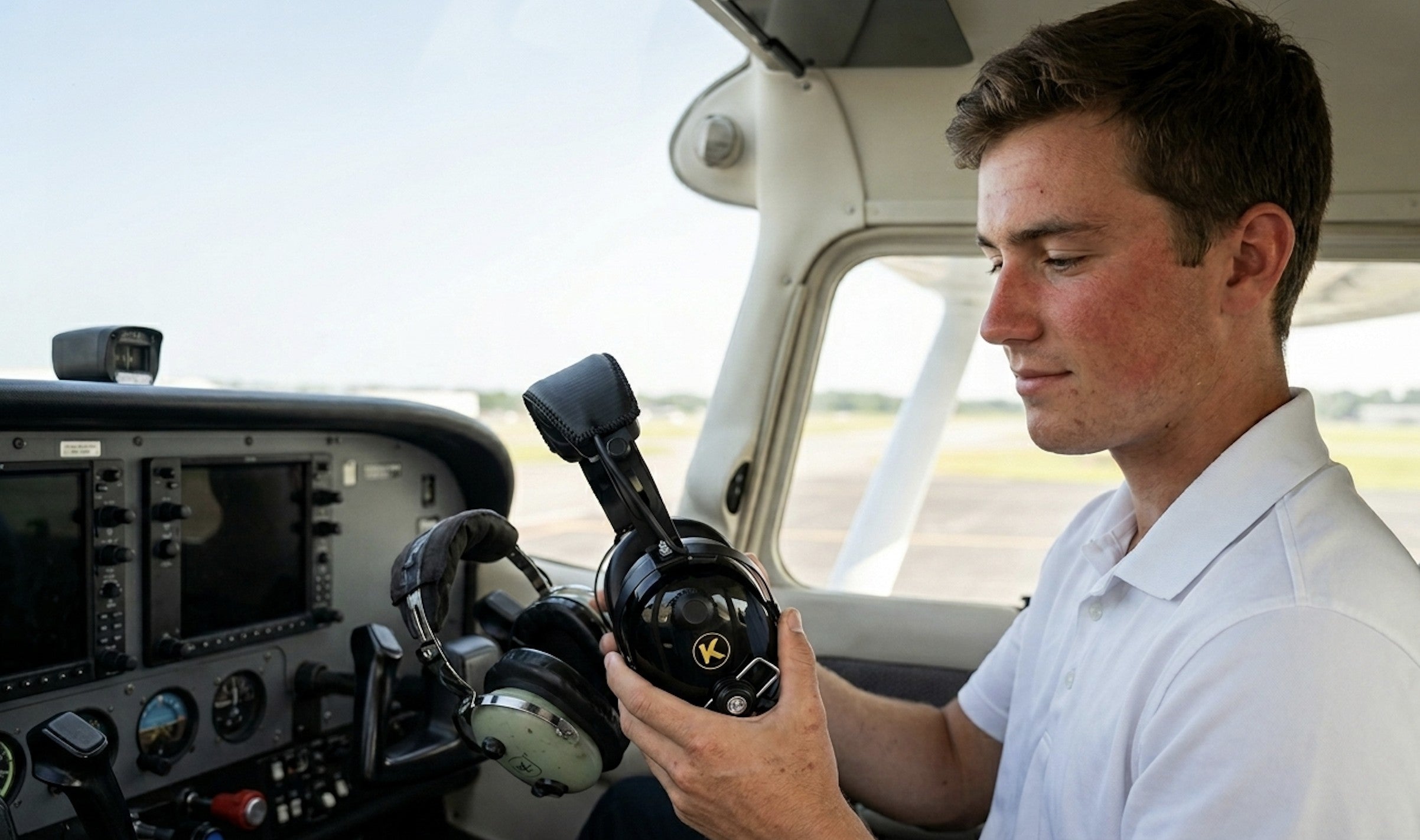
KORE Aviation - The right aviation headset protects your hearing, reduces fatigue on long flights, and keeps your radio communications clear. That sounds simple, but it matters more than most student pilots expect at the start.
What Does an Aviation Headset Actually Do
An aviation headset really has two jobs. First, it blocks cockpit noise from reaching your ears. Second, it picks up your voice clearly so ATC can understand you without repeats or confusion.
Cockpit noise in a typical piston aircraft usually falls between 85 and 100 dB. That is already above the OSHA-recommended safe exposure level for long periods. Even a few hours in that environment without proper protection can take a toll. A quality aviation headset brings that exposure down to a safer range. Just as important, it removes the constant strain of trying to hear over engine noise. That mental relief makes a big difference, especially on longer cross-country flights.
Also read: What is the Difference Between an Aviation Headset and a Normal Headset?
PNR vs ANR: Which Aviation Headset Do You Actually Need
This is the first real decision most pilots face when buying an aviation headset.
Passive Noise Reduction
Passive Noise Reduction, often called PNR, relies on the physical design of the headset to block sound. There are no electronics involved, and no batteries to worry about.
- PNR headsets use ear cup design and seal materials to block sound mechanically
- A well-designed aviation headset with gel ear seals can reach around 24 dB noise reduction
- That level of protection is more than enough for most piston aircraft used in training
What makes PNR appealing is its simplicity. It always works, it is reliable, and it keeps costs lower. You never have to think about batteries dying mid flight.
Active Noise Reduction
Active Noise Reduction, or ANR, works differently. It uses microphones and electronics to cancel out low-frequency noise.
- ANR is especially helpful in louder aircraft or when flying long hours
- It reduces background noise in a more noticeable way, especially engine rumble
- The tradeoff is cost, usually between 900 and 1200 dollars
For a student pilot flying a Cessna 172 or Piper Cherokee, ANR is nice but not necessary. A solid aviation headset with PNR will do the job very well.
Read More: PNR vs ANR Headsets: Which Suits Best for Student Pilot?
The Seal Makes a Bigger Difference Than You Think
One detail that often gets overlooked when choosing an aviation headset is the ear seal. Foam ear seals are common, especially in lower-priced headsets. They work, but they compress over time and do not always maintain a tight seal.
- Foam seals are cheaper and get the job done at first
- Over time, they lose shape and let more noise in
- Comfort can decrease on longer flights
Gel ear seals tell a different story.
- Gel seals conform to your head shape, even if you wear glasses
- They distribute pressure more evenly, which reduces fatigue
- They maintain a better seal over time, improving real world noise reduction
This is why some brands like David Clark charge extra $50 for gel upgrades. KORE Aviation includes them as standard, which makes a noticeable difference right away.
Aviation Headset Comparison: Top Options by Category
| Headset | Type | PNR | Ear Seals | AUX Input | Warranty | Price (approx.) |
|---|---|---|---|---|---|---|
| KORE Aviation KA-1 | PNR | 24 dB | Gel standard | Yes | 5 years | ~$220 |
| David Clark H10-13.4 | PNR | 23 dB | Foam (gel +$50) | No | 5 years | ~$400–$450 |
| Lightspeed Zulu 3 | ANR | ~30 dB (ANR) | Gel | Yes | 5 years | ~$899 |
| Bose A20 and A30 | ANR | ~30 dB (ANR) | Gel | Yes | 5 years | ~$1,249 |
| Rugged Air RA200 | PNR | ~23 dB | Foam | No | 1 year | ~$99 |
Sources: Manufacturer specifications. David Clark H10-13.4 gel seal pricing per David Clark website. Bose A20, A30 and Lightspeed Zulu 3 pricing per respective manufacturer websites.
What Category Does Each Headset Actually Compete In?
It helps to think about headsets in three tiers:
1. Entry-Level / Rental Replacement (~$99–$150)
This is where you'll find headsets like the Rugged Air RA200. Fine for renting or occasional flying, but foam seals, shorter warranties, and basic mic quality show the difference. The KORE Aviation P1 also lives in this range as a lightweight option for pilots who want KORE build quality at a lower entry price.
2. Mid-Tier Professional (~$200–$450)
This is the sweet spot for most pilots.
- You get strong noise reduction and better materials
- Comfort improves significantly, especially with gel seals
- Warranties are usually longer, often around five years
The KORE KA-1 and David Clark H10-13.4 both sit here, but the price gap is significant.
3. Premium ANR ($900–$1,250+)
Bose and Lightspeed own this tier. If you're flying 400+ hours a year or doing instrument training in a noisy aircraft, ANR may worth the investment. For most student pilots building their first 250 hours, it's a lot of money for a marginal real-world improvement over a quality PNR.
Features to Look For in Your First Aviation Headset
-
PNR rating of 23 dB or higher
Anything below this starts to feel inadequate on longer flights or in louder aircraft. The FAA recommends hearing protection for all flight operations given typical cockpit noise levels. -
Gel ear seals
Worth it for comfort and acoustic seal, especially if you wear glasses. -
Noise-canceling microphone
Reduces background noise on the radio. ATC will thank you. -
Stereo capability and AUX input
Useful for listening to music, ForeFlight audio, or weather broadcasts between calls. -
Warranty of 3 years or more
A headset is a tool you'll use hundreds of hours. A short warranty on a flight-critical piece of gear is a yellow flag.
What Student Pilots Usually Regret After Buying the Wrong Headset
Most student pilots regret buying the wrong one first. A cheap headset can seem like the safe choice at the beginning. It feels like a smaller risk. But after a few months, many pilots realized the tradeoff was not worth it. The noise reduction is weaker, the ear seals are less comfortable, and the whole thing starts to feel like something they want to replace.
That leads to the classic problem. You buy one headset to get started, then buy another one later that you actually wanted in the first place.
On the other hand, some students overspend early on and buy a premium ANR headset before they really need it. That is not always a bad decision, but for many people it ties up money that could have gone toward flight time, instruction, or other training costs. The sweet spot for most people is still the same. Buy a headset that is good enough to carry you through training without forcing you to pay for features you may not need yet.
Should You Buy One Headset for Training and Keep It Long Term
In most cases, yes.
A good aviation headset should not be thought of as a short-term purchase. If you choose well, it can take you from your first lesson all the way through advanced ratings and years of flying after that. That is why buying only for the lowest possible price often backfires. A headset that saves you money today but leaves you wanting more in six months is not really the cheapest option.
A better approach is to choose a headset you will still be happy with after your first solo, after your checkride, and after a long cross-country ride when comfort matters just as much as performance. That is one reason mid range models make so much sense. They are usually the point where quality, price, and long-term usefulness all meet.
A Note on Buying Your First Headset as a Student Pilot
The most common mistake student pilots make is buying a $99 headset to "start with" and then upgrading six months later, paying twice. The second most common mistake is jumping straight to a $1,000+ ANR headset before they've logged enough hours to appreciate the difference.
The mid-tier is where most pilots land for good reason. A headset like the KA-1 will last you from your first solo through your instrument rating and beyond. Buy once, buy right.
Frequently Asked Questions: Aviation Headsets
1. What is a good PNR rating for an aviation headset?
Look for 23 dB or higher. Most quality mid-tier PNR headsets hit 23–24 dB, which brings typical cockpit noise levels down to safe and comfortable ranges for most piston GA aircraft.
2. Do I need ANR as a student pilot?
No, a quality PNR headset with gel ear seals provides excellent noise reduction for training aircraft like the Cessna 172 or Piper Cherokee. ANR becomes more valuable if you fly high-hours professionally or in noisier airframes.
3. Are gel ear seals worth it?
Yes. Gel seals conform better to the shape of your head, create a tighter acoustic seal, and are significantly more comfortable on flights over an hour. They also work better if you wear glasses.
4. What plugs do I need for a GA headset?
Most general aviation aircraft use dual plug (GA plug) connectors, a larger plug for audio and a smaller one for the mic. Helicopter and military aircraft typically use a single U-174/U plug. Check your aircraft before buying.
5. How does the KORE KA-1 compare to David Clark?
The KA-1 matches or edges the David Clark H10-13.4 on specs (24 dB vs. 23 dB PNR, gel seals standard, AUX input included) while coming in at roughly half the price (~$225 vs. ~$400–$450). Both carry a 5-year warranty.
6. Can I use my aviation headset for ForeFlight audio?
Yes, if your headset has an AUX input (like the KA-1), you can connect it to your iPad or phone to hear ForeFlight audio alerts, weather broadcasts, and traffic advisories through your headset.
7. How long should an aviation headset last?
A well maintained mid-tier headset should last 5–10 years or more with normal use. Ear seal replacement (typically every 2–3 years) is the main maintenance item. A 5-year warranty is the industry standard for quality headsets.
The Bottom Line
Choosing the right aviation headset is not about chasing the most expensive option. It is about finding the balance between performance, comfort, and value. A well-chosen aviation headset will protect your hearing, reduce fatigue, and support you through every stage of training.
Check out KORE Aviation KA-1, premium and affordable headsets if you want strong performance without spending more than you need.


