

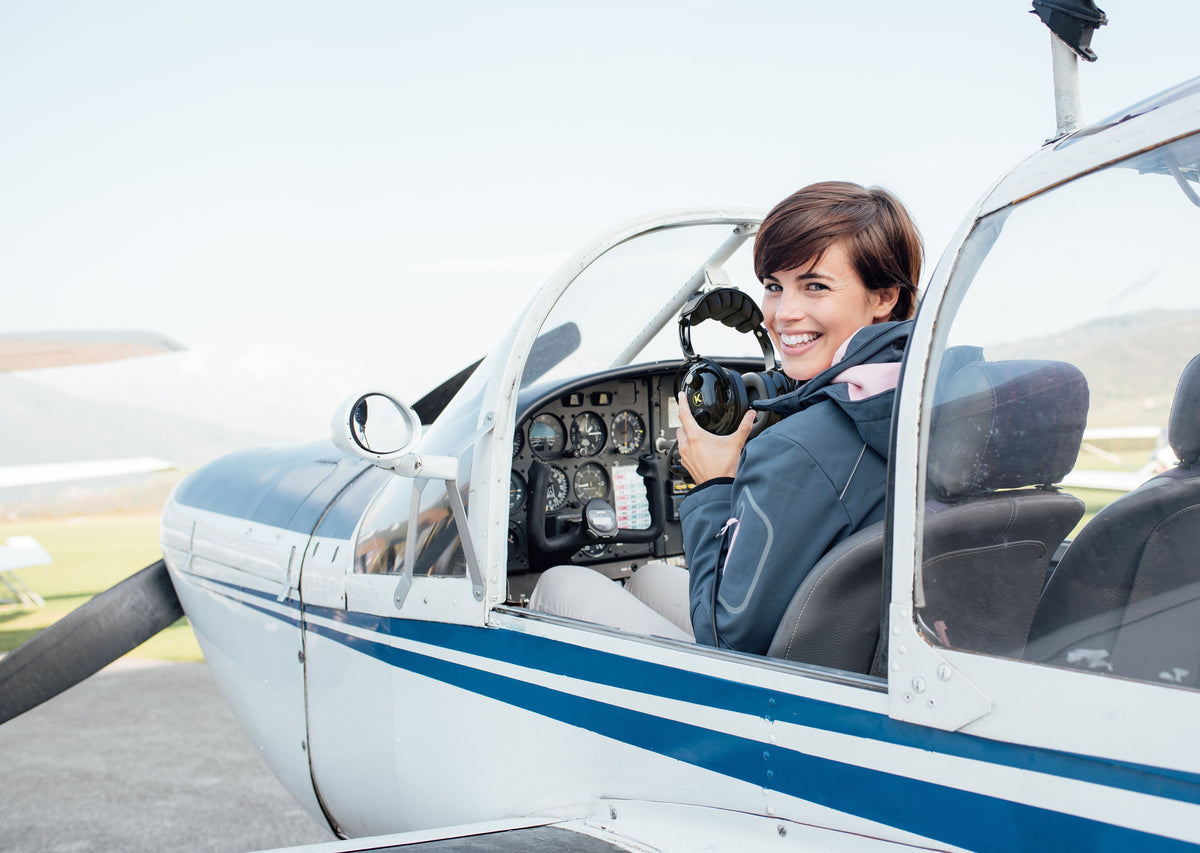
KORE Aviation - So you have been looking at the Bose A20 and wondering if there is a Bose A20 alternative that actually makes sense for someone just starting to fly. You are not the only one asking that question. Nearly every student pilot hits the same wall when they start shopping for gear.
The A20 is a solid headset. Nobody is arguing that. But at $1,095 for the dual plug model, it was built for pilots who fly hundreds of hours a year in loud turboprops and aging piston twins. If you are a beginner pilot looking for a proven Bose A20 alternative that fits your budget and your training stage, this guide is for you.
Here is the thing most gear guides will not tell you: your headset budget has a direct impact on how fast you earn your certificate. When a Private Pilot License already costs $10,000 to $15,000, every dollar you save on equipment is a dollar you can put toward flight hours. And flight hours are what actually get you closer to passing your checkride.
What Beginner Pilots Actually Need in a Headset
Before we get into specific headsets, it helps to understand what actually matters when you are learning to fly. As a student pilot, you need three things from your headset:
- Clear communication with ATC. You are going to be talking to tower, ground, and approach controllers while simultaneously managing checklists, watching for traffic, and trying to hold altitude. Your headset needs to deliver clear audio and a microphone that transmits your voice without clipping or static.
- Enough noise reduction to stay focused. Training aircraft like the Cessna 172 and Piper Cherokee are loud. You do not need silence, but you need the cockpit noise reduced enough that you can hear your instructor and focus on learning. Good passive noise reduction (PNR) handles this just fine for training flights.
- Comfort for 1 to 3 hour sessions. Most training flights are pattern work (20 to 40 minutes), dual cross countries (1.5 to 2.5 hours), or solo practice. You need a headset that stays comfortable for that window. If it gives you a headache after 90 minutes, you will dread putting it on.
That is it. You do not need Bluetooth streaming. You do not need a carbon fiber frame. You do not need electronic noise cancellation that requires batteries. Those features are nice for a 500 hour commercial pilot doing 4 hour legs, but they are overkill for someone learning how to land.
KORE Aviation KA-1: The Best Overall Bose A20 Alternative for Beginners ($224.95)
The KORE Aviation KA-1 is the headset that keeps coming up in student pilot forums and flight school recommendations, and there is a simple reason for that: it delivers everything a beginner pilot needs at $870 less than the Bose A20.

Here is what you get with the KA-1:
- Gel ear seals come in the box. This is a bigger deal than it sounds. Most headsets in this price range ship with foam pads, and the gel upgrade costs an extra $30 to $50. The KA-1 includes gel seals standard, which improves both comfort and passive noise reduction right out of the package.
- Mono and stereo switch. Use the same headset in your training aircraft (mono) and on your home flight simulator (stereo). No need to buy separate gear for sim practice.
- Auxiliary audio input. Plug in your phone or tablet to hear ForeFlight alerts, listen to ATIS on the ground, or stream music during a solo cross country. It connects directly through the headset so you are not juggling earbuds under your ear cups.
- Dual volume controls. Independent left and right volume knobs let you fine tune audio balance, which is useful when you are splitting attention between ATC in one ear and your instructor in the other.
- 5 year warranty. That is the same warranty length as the Bose A20 itself, at roughly one fifth the cost.
Over 30,000 pilots fly with KORE headsets, and more than 50 flight schools across the country use them in their training fleets. That kind of adoption does not happen because of marketing. It happens because the headset holds up to daily student use and delivers clear communication flight after flight.
The passive noice reduction is solid. Combined with those included gel ear seals, the KA-1 blocks enough cockpit noise for comfortable training flights in a 172 or Cherokee, which is where you will spend most of your time as a student. Is it electronic ANR like the Bose A20? No. But for flights under 2 to 3 hours, which covers nearly every training mission you will fly, you will not notice the difference.
At $224.95, the KA-1 saves you $870 compared to the A20. That is roughly 6 to 8 extra flight hours at most training rates. Think about that: you could buy the KA-1 and use the savings to fly enough hours to get through your first solo.
Best for: Student pilots, flight school renters, sim pilots moving to real aircraft, and anyone who wants a reliable Bose A20 alternative without blowing their training budget. Also makes an excellent backup headset for instrument students who want a spare in their flight bag.
Read more: Student Pilot Headset Upgrade Guide: When to Move Up and What to Look For
KORE Aviation P1: The Smartest Budget Bose A20 Alternative for New Students ($124.95)
If you are completely new to aviation and just want to get in the air without overthinking the gear purchase, the KORE Aviation P1 makes the decision easy.

At $124.95 you get:
- Passive noise reduction with comfortable ear seals that block cockpit noise effectively in training aircraft.
- Noise cancelling electret microphone for clear ATC communication, even in loud single engine cockpits.
- Lightweight, no nonsense design with no batteries to manage or electronics to troubleshoot.
- 1 year warranty from KORE Aviation.
The P1 costs roughly one ninth of the Bose A20. For a student pilot logging their first 40 to 60 hours toward a PPL, this headset delivers everything you need to communicate, stay comfortable, and focus on learning to fly.
Lots of flight schools recommend the P1 as a starter headset because it removes the biggest barrier for new students: the cost of gear. A discovery flight plus your own headset for under $300 total? That is how you get started without the financial stress that keeps a lot of aspiring pilots on the ground.
You can always upgrade later. But you cannot fly if you never start. As a Bose A20 alternative for beginners on a tight budget, the P1 is hard to beat.
Best for: First time student pilots, discovery flight participants, aspiring pilots testing the waters, and anyone who wants to start flying today without overthinking the purchase.
KA-1 vs P1: Picking the Right Bose A20 Alternative for Your Budget
Both headsets are built for the same mission: getting beginner pilots in the air with reliable gear at an honest price. Here is how they compare to each other and to the Bose A20.
| Feature | KORE KA-1 | KORE P1 | Bose A20 (reference) |
|---|---|---|---|
| Price | $224.95 | $124.95 | $1,095 |
| Noise Reduction | PNR with gel seals | PNR | ANR |
| Gel Ear Seals | Included | Optional upgrade | Not included |
| Aux Audio Input | Yes | No | Bluetooth |
| Mono/Stereo Switch | Yes | No | No |
| Warranty | 5 years | 1 year | 5 years |
| Batteries Required | No | No | Yes (2x AA) |
| Savings vs A20 | $870 | $970 | (baseline) |
*Bose A20 specs sourced from publicly available product information. Pricing reflects manufacturer retail as of June 2026.
Quick decision guide:
- Pick the KA-1 if you want the complete package: gel ear seals, aux input for ForeFlight, mono/stereo for sim and cockpit use, and a 5 year warranty. This is the headset to buy if you plan to fly regularly through your PPL and beyond.
- Pick the P1 if you want the lowest cost path to getting airborne. It covers all the basics and lets you start flying now. You can always upgrade to the KA-1 later once you know you are committed to training.
- Consider both: A KA-1 as your primary plus a P1 as your backup costs $349.90 total. That is still less than one third of a single Bose A20, and you have two working headsets in your flight bag.
Read more: Best Aviation Headset for Student Pilots (2026) - Top Picks Under $300
Why a Budget Bose A20 Alternative Beats the Real Thing for Beginners
There is a common misconception in aviation that expensive gear equals better training. It does not. Here is why:
Training flights are short. Most of your time as a student pilot is spent on flights between 0.8 and 2.5 hours. Pattern work, slow flight, stalls, ground reference maneuvers. These are not 6 hour cross country endurance tests. A quality PNR headset handles these flights without any issues.
Your ears are less of a bottleneck than your skills. During your first 20 hours, you are focused on keeping the airplane coordinated, managing checklists, and learning to talk on the radio. The difference between a $225 PNR headset and a $1,095 ANR headset is not going to change how quickly you learn to hold a heading or nail a crosswind landing.
The money you save goes directly toward what matters. At roughly $200 to $300 per flight hour (aircraft rental plus instructor), saving $870 on your headset buys you 3 to 4 more dual instruction flights. That is the difference between a student who solos at 15 hours and one who solos at 20.
Frequently Asked Questions
1. Is the Bose A20 still worth buying in 2026?
The A20 is still a quality headset, but the value equation has changed. In 2026, you can get a comfortable PNR headset with gel ear seals and a 5 year warranty for under $225. Unless you are already flying 200+ hours a year in loud piston aircraft, the savings from choosing a Bose A20 alternative like the KA-1 will serve you better, especially as a beginner.
2. What is the difference between ANR and PNR?
ANR (Active Noise Reduction) uses electronics and tiny microphones to cancel low frequency engine noise. PNR (Passive Noise Reduction) blocks noise physically through the ear seals and cup design. ANR is better in continuous loud environments like turboprops, but quality PNR headsets with gel seals reduce cockpit noise enough for comfortable training flights lasting 1 to 3 hours.
3. Can I really use a $125 to $225 headset for flight training?
Absolutely. More than 50 flight schools across the US use KORE headsets in their training programs, and over 30,000 pilots fly with them. The KA-1 and P1 are built specifically for general aviation and hold up to daily student use. Clear comms, solid noise reduction, and reliable performance are what you need for training, and both headsets deliver that.
4.Do flight schools let you bring your own headset?
Nearly all Part 61 and Part 141 flight schools allow and encourage you to bring your own headset. School headsets are often well worn and shared among multiple students. Owning your own means consistent fit, better hygiene, and comfort you can count on from your first lesson forward.
5. Should I buy a used headset or a new budget one?
Used headsets can be risky. Worn ear seals, degraded batteries, cracked headbands, and intermittent mic issues are common problems, and you usually will not discover them until you are in the cockpit. A new headset at $124.95 to $224.95 comes with a manufacturer warranty and known working condition. Unless you can inspect and test a used headset in person, a new budget option is the smarter call.
The Bottom Line
Your headset is a tool, not a trophy. As a beginner pilot, the smartest investment you can make is choosing reliable gear that works and spending the rest of your budget where it counts: in the air.
The KORE Aviation KA-1 at $224.95 gives you gel ear seals, a 5 year warranty, and the same clear communication that pilots get from headsets costing four or five times more. If you want the absolute lowest cost to get started, the P1 at $124.95 removes every financial excuse not to book that first lesson.
The Bose A20 is a great headset. It is just not a necessary one, especially when you are watching every dollar of your training budget. Fly smart. Fly often. Put your money where it moves the needle: in the logbook.


