

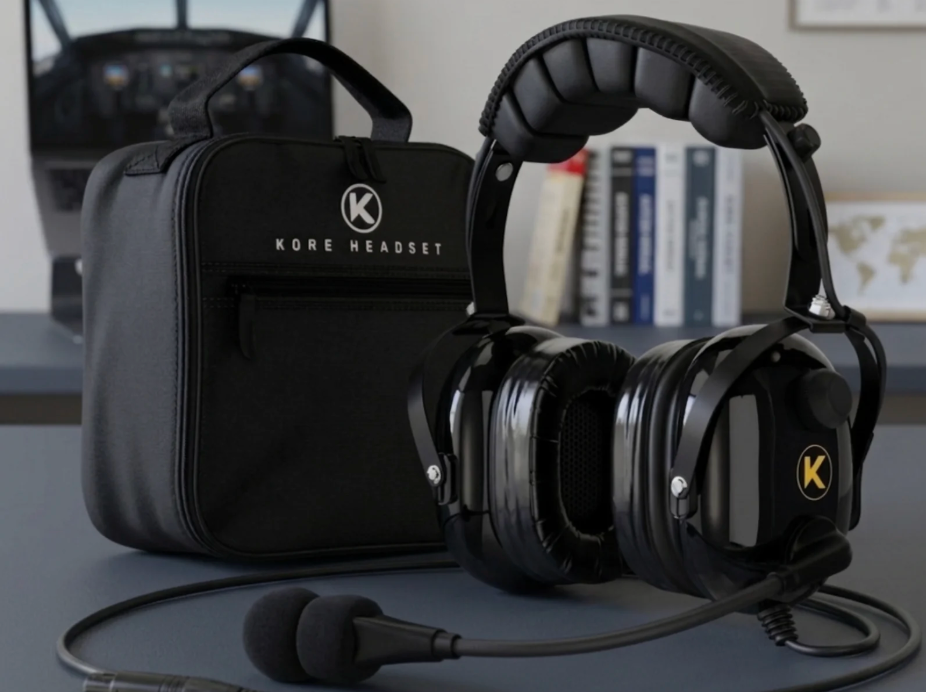
KORE Aviation Setting a $500 ceiling on your first aviation headset is one of the smarter moves you can make as a student pilot. You avoid the trap of overspending before you know what you actually need in the cockpit, and you still have access to genuinely solid gear. The best aviation headset under $500 in 2026 is not a compromise pick. Several options in this bracket deliver the noise reduction, comfort, and durability that matter most during training.
This guide breaks down every price tier below that $500 mark, explains exactly what you get (and what you give up) at each level, and lays out the features that are actually worth your money. By the end, you will know exactly which type of aviation headset under $500 makes sense for your situation.
What $500 Gets You in the Aviation Headset Market
The aviation headset market splits into roughly five tiers. Setting $500 as your budget puts three of those five tiers within reach:
- Entry PNR ($90 to $200): Basic passive noise reduction headsets with foam ear seals, simple builds, and shorter warranties. Functional for occasional flying or as a backup headset.
- Mid PNR ($200 to $400): Better materials, gel ear seals (often included), longer warranties, and small features like auxiliary audio inputs. This is where most student pilots end up, and for good reason.
- Budget ANR ($350 to $500): Entry-level active noise reduction. These headsets electronically cancel low-frequency engine noise on top of the passive seal. Battery powered (usually 2xAA), and some models include Bluetooth.
The two tiers above $500 cover mid-range ANR ($700 to $1,100) and premium ANR ($1,100+). Those headsets offer features like panel power, advanced Bluetooth codecs, carbon fiber builds, and longer warranties. But for a student pilot flying 3 to 5 hours per week in a Cessna 172, the best aviation headset under $500 covers every functional need you will encounter during training.
Also read: How to Choose the Right Aviation Headset (And Not Overpay)
Entry PNR Headsets ($90 to $200): When They Make Sense

Headsets in this bracket use passive noise reduction only, meaning the ear seals and cup design block sound mechanically. Most entry PNR headsets deliver around 22 to 24 dB of noise reduction, which brings a Cessna 172 cockpit (85 to 95 dB at cruise) down to a manageable 65 to 70 dB range.
At this price, you will typically get:
- Foam ear seals that are adequate for flights under 2 hours, but they compress over time and leak noise
- 1 to 2 year warranty
- Basic noise-canceling electret microphone
- Dual GA plugs (PJ-055 + PJ-068, the standard for most training aircraft)
- Weight around 14 to 18 oz
If you are searching for the best aviation headset under $500, entry PNR is technically in your budget but probably not the best use of it. These headsets work fine if you are flying once a week or less, if you need a backup for passengers, or if you genuinely cannot stretch your budget further. The KORE P1 at $124.95 sits in this tier but punches above it with 24 dB NRR and a noise-canceling electret mic that holds its own against headsets at twice the price.
Also read: How Much Should You Spend on Your First Aviation Headset?
Mid PNR Headsets ($200 to $400): The Best Value Bracket
This is where the best aviation headset under $500 lives for most student pilots. The jump from entry PNR to mid PNR is the single biggest upgrade in comfort, durability, and overall flying experience you can get per dollar spent.
At this price tier, you start seeing:
- Gel ear seals included (not a $40 to $50 add-on), which seal better, stay comfortable longer, and reduce noise leakage significantly
- 5-year warranties or longer, meaning the headset pays for itself many times over during your training
- 3.5mm auxiliary audio input for connecting a phone or tablet to listen to ATC recordings, music between flights, or ForeFlight audio alerts
- Sturdier builds with steel or reinforced headbands that survive being tossed in a flight bag hundreds of times
- Better weight distribution with padded headbands designed for flights lasting 3 to 4+ hours
The KORE Aviation KA-1 sits right in this bracket at $224.95. It includes gel ear seals as standard (most competitors charge $40 to $50 extra for that upgrade), ships with a 5-year warranty, delivers 24 dB of passive noise reduction, and has a 3.5mm audio input built in. Over 30,000 pilots and 50+ flight school partners use KORE headsets, which tells you something about real-world durability and value.
For context: a typical PPL takes 60 to 75 flight hours. A headset at $224.95 with a 5-year warranty works out to roughly $3 to $4 per flight hour across your entire private pilot training. An entry-level headset at $100 with a 1-year warranty might seem cheaper, but if you replace it twice during training, you spent more and dealt with worse comfort the entire time.
Also read: Best Aviation Headset for Student Pilots in 2026: The Value Tier Explained
Budget ANR Headsets ($350 to $500): Is the Jump Worth It?
Active noise reduction headsets use built-in electronics (powered by batteries, usually 2xAA) to generate a sound wave that cancels low-frequency engine drone. On top of the 22 to 24 dB you get from passive sealing, ANR adds another 10 to 15 dB of reduction, mainly in the low-frequency range where engine noise is loudest.
Under $500, the ANR options deliver:
- Total noise reduction around 35 to 45 dB (passive + active combined)
- Battery life of 20 to 40+ hours on standard AA batteries
- Some models include Bluetooth for phone calls and audio streaming
- 3 to 5 year warranties
- Weight around 14 to 16 oz
The real question: is that extra noise reduction worth spending $150 to $275 more than a mid-tier PNR headset? For most student pilots, the honest answer is not yet.
Budget ANR headsets at this price point make tradeoffs to hit their price target. The ANR circuitry is effective but not as refined as what you find in the $700+ range. Build quality sometimes takes a hit. And the batteries add a dependency: if they die mid-flight, the ANR shuts off and you are left with passive-only performance that may not match a purpose-built PNR headset at the same price.
ANR makes a bigger difference for pilots flying 4+ hours regularly, in noisier aircraft, or in IFR environments where reduced fatigue improves focus during approach procedures. If you are doing 1 to 2 hour training flights in a Cessna 172, a quality PNR headset handles the job well. That is why many experienced pilots and flight instructors argue that the best aviation headset under $500 is actually a well-built PNR model, not a budget ANR one.
Also read: Do You Need an ANR Aviation Headset?
Aviation Headset Comparison: Under $500 by Category

| Feature | Entry PNR ($90-$200) | Mid PNR ($200-$400) | Budget ANR ($350-$500) |
|---|---|---|---|
| Noise Reduction | 22-24 dB passive | 22-24 dB passive | 35-45 dB total¹ |
| Ear Seals | Foam (standard) | Gel (often included) | Gel or foam |
| Warranty | 1-2 years | 5+ years | 3-5 years |
| Weight | 14-18 oz | 12-18 oz | 14-16 oz |
| Bluetooth | No | Rarely | Some models |
| Aux Input | Some models | Yes | Yes |
| Battery Required | No | No | Yes (2xAA) |
| Best For | Backup, occasional flying | Student pilots, regular training | Longer flights, noise-sensitive pilots |
| Example | KORE P1 ($124.95) | KORE KA-1 ($224.95) | Various budget ANR models |
¹ Combined passive + active noise reduction. Actual ANR performance varies by frequency range. Low-frequency reduction (below 300 Hz) sees the biggest improvement; higher frequencies rely mostly on passive sealing.
So which is the best aviation headset under $500? The table above paints a clear picture: mid PNR headsets offer the strongest combination of comfort, protection, warranty, and simplicity for the money.
Five Features Worth Paying For Under $500 (and Three That Are Not)
Worth It
- Gel ear seals: The single biggest comfort upgrade you can get. Gel seals distribute pressure more evenly, seal better against glasses frames, and last longer than foam. If your headset does not include gel seals, budget an extra $35 to $50 for aftermarket ones.
- A 5-year warranty (or longer): Flight training is rough on gear. A longer warranty protects your investment through PPL, instrument rating, and beyond.
- 24 dB passive noise reduction: This is the functional baseline for comfortable GA flying. Anything below 22 dB and you will notice the difference on longer flights.
- Noise-canceling electret microphone: Your instructor and ATC need to hear you clearly. A good mic matters more than most pilots realize during training.
- 3.5mm auxiliary audio input: Useful for connecting your phone or tablet. Not critical, but surprisingly handy once you start cross-country flights with ForeFlight.
Not Worth the Premium Under $500
- Bluetooth (at this price): Budget ANR headsets with Bluetooth often compromise on build quality to hit a price point. Nice to have, but not worth sacrificing durability or warranty length.
- TSO certification: Required for Part 121 airline operations but completely unnecessary for Part 91 GA flying and student training.
- Carbon fiber or titanium construction: Looks great in marketing photos. You will not notice a meaningful difference in a training cockpit. Save your money.
Also read: What Makes a Good Student Pilot Headset? 7 Things Your Flight School Won't Tell You
Where the KORE KA-1 Fits for Student Pilots

The KORE Aviation KA-1 lands at $224.95, which puts it in the mid PNR tier but closer to the entry-level price point. That gap between what you pay and what you get is exactly why over 30,000 pilots fly with KORE and why 50+ flight schools have adopted it as their recommended or provided headset.
Here is what the KA-1 includes at that price:
- 24 dB passive noise reduction
- Gel ear seals included (no $40+ upgrade required)
- 5-year warranty
- Noise-canceling electret microphone
- 3.5mm auxiliary audio input
- Dual gold-plated GA plugs
- Comfortable enough for 4+ hour cross-country flights
At a mid-tier PNR headset from another brand, you might pay $350 to $400 and still need to buy gel seals separately. With the KA-1, you get everything out of the box. That leftover $275 from your $500 budget? Put it toward flight hours. At most schools, $275 covers 1 to 2 additional training flights, which is a far better investment than a fancier headset.
If you are on a tighter budget, the KORE P1 at $124.95 gives you the same 24 dB NRR with a 1-year warranty. It is an excellent starter headset and a solid backup down the road. When you factor in what you get for the price, the KA-1 consistently ranks among the best aviation headset under $500 options available right now.
Also read: 5 Things Student Pilots Waste Money On
Finding the best aviation headset under $500 comes down to knowing your priorities. The sections below answer the most common questions pilots ask when shopping in this price range.
Frequently Asked Questions
1. What is the best aviation headset under $500 for student pilots?
For most student pilots, a mid-tier PNR headset in the $200 to $400 range offers the best balance of noise reduction, comfort, and value. The KORE Aviation KA-1 at $224.95 is a strong pick because it includes gel ear seals, a 5-year warranty, and 24 dB NRR without any extra purchases. Budget ANR headsets ($350 to $500) are an option if you prioritize maximum quiet, but quality PNR handles most training environments well.
2. Is it worth buying an ANR headset under $500?
It depends on how much you fly and how noise-sensitive you are. Budget ANR headsets under $500 do reduce low-frequency engine noise effectively, but they make tradeoffs in build quality and warranty compared to a well-built PNR headset at the same price. For student pilots flying 1 to 2 hour lessons, a quality PNR headset with gel seals is typically the smarter investment.
3. How much noise does a $200 aviation headset actually block?
Most quality aviation headsets in the $200 range offer 22 to 24 dB of passive noise reduction. In a Cessna 172 cockpit (85 to 95 dB at cruise), that brings the ambient noise down to about 65 to 70 dB, which is roughly the volume of normal conversation. Gel ear seals improve the effective seal by 2 to 3 dB compared to foam.
4. Should I buy the cheapest headset and upgrade later?
This "buy cheap now, upgrade later" approach sounds logical but usually costs more in the long run. A $90 headset with a 1-year warranty that you replace after 18 months costs $180 total and gives you worse comfort the entire time. A $225 headset with a 5-year warranty lasts through PPL and well into your instrument rating, saving money and delivering better flights from day one.
5. Can I use a consumer noise-canceling headphone for flying?
No. Consumer headphones (even premium ANC models) lack aviation-specific features like noise-canceling electret microphones for ATC communication, dual GA plugs (PJ-055 + PJ-068), and the passive noise reduction rating required for cockpit environments. Consumer headphones also clamp at around 3.5 to 4 N, while aviation headsets use 6 to 7 N of clamping force for proper sealing against cockpit noise levels that reach 100+ dB during run-up.
Bottom Line
Finding the best aviation headset under $500 does not mean spending your full budget. For most student pilots, the sweet spot is a well-built PNR headset that delivers reliable noise reduction, comfortable ear seals, clear communication, and enough durability to last through training.
The KORE Aviation KA-1 at $224.95 fits that balance with 24 dB passive noise reduction, gel ear seals, a 5-year warranty, and a 3.5 mm audio input. Budget ANR can be worth considering if you regularly fly longer legs or prefer a quieter cockpit, while entry-level PNR models such as the KORE P1 can make sense for tighter budgets or backup use.
Choose the headset that fits how often you fly and what you actually need in the cockpit. If a $225 headset handles your training comfortably and reliably, the rest of that $500 budget may be better spent on something every student pilot needs more of: flight time.


