

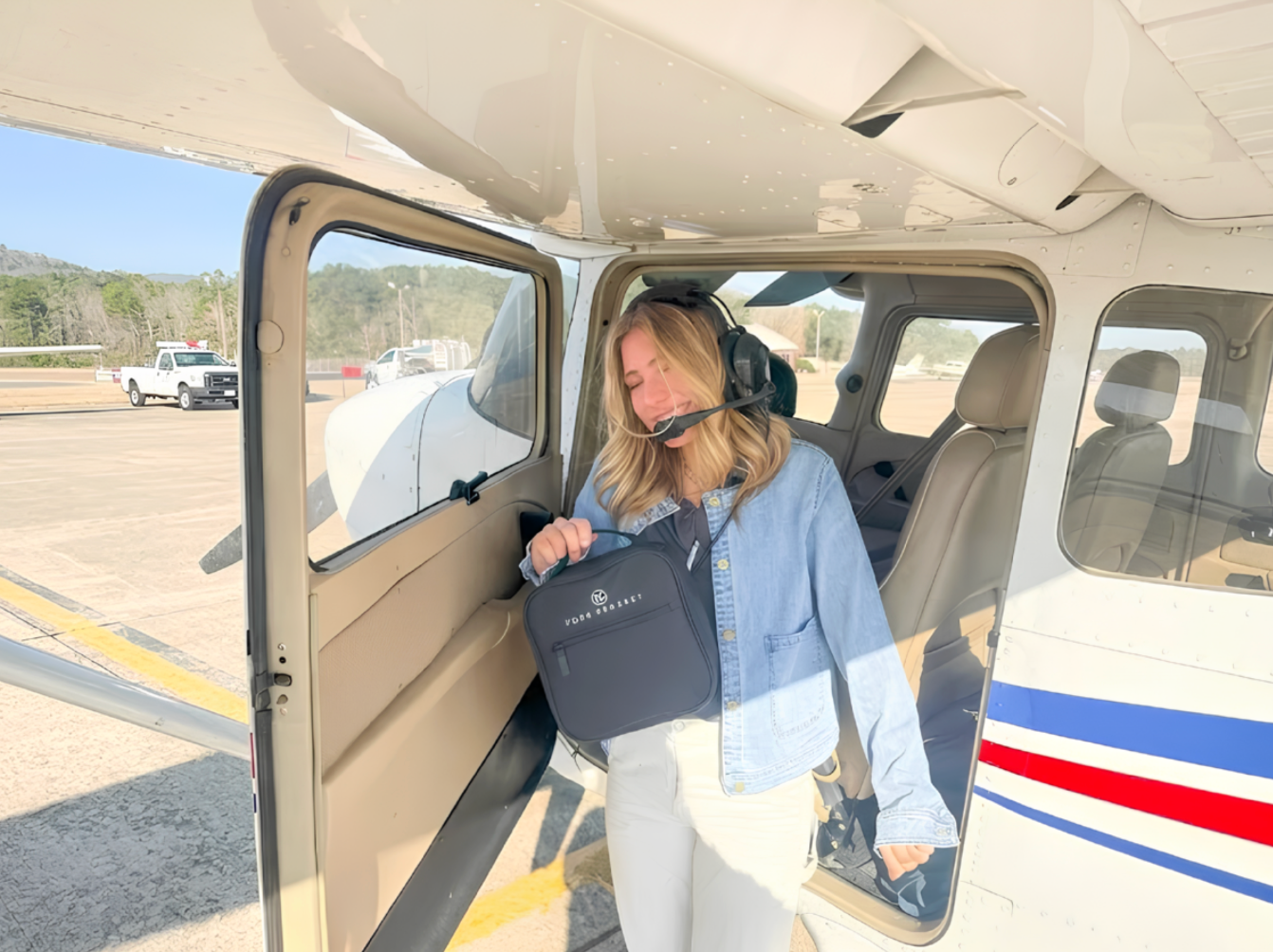
KORE Aviation - Your flight school will teach you how to fly, but they probably won't spend much time talking about the one piece of gear you'll use on every single flight: your headset. Most student pilots grab whatever the school has on the shelf, or they buy the first one that pops up on Amazon. Both of those approaches cost you money, comfort, and sometimes your ability to hear ATC clearly when it matters most.
A good student pilot headset is more than a noise blocker. It protects your hearing, keeps you focused during long training sessions, and makes radio communication second nature instead of a constant struggle. After talking with flight instructors and student pilots at 50+ flight schools that partner with KORE Aviation, here are seven things most schools never bring up about choosing the right headset for training.
1. Rental Headsets Are a Hidden Money Pit
Most flight schools charge between $5 and $15 per flight for headset rentals. That sounds reasonable until you do the math. If you fly three or four times per week (which is the pace most CFIs recommend for PPL training), you're spending $60 to $240 per month just to borrow a headset.
Over a typical 60 to 75 hour private pilot course, rental fees add up to $300 to $750. That's enough to buy a quality student pilot headset outright and still have money left over. The KORE Aviation KA-1, for example, runs $224.95 and comes with gel ear seals and a carrying case included. At $5 per flight, the headset pays for itself in about 45 flights.
Beyond the cost, rental headsets come with another problem: hygiene. Those foam ear seals have been pressed against dozens of other students' ears. Flight schools clean them, but foam absorbs sweat and oils over time. Owning your own headset means fresh ear seals that actually seal properly against your ears.
Also read: How Much Should You Spend on Your First Aviation Headset?
2. Cockpit Noise Is Doing More Damage Than Anyone Admits

A Cessna 172 cockpit hits 85 to 95 dB at cruise power and can exceed 100 dB during engine run-up. According to the FAA and OSHA, unprotected exposure above 90 dB for eight hours per day can cause permanent hearing loss. But here is the part that catches student pilots off guard: the damage is cumulative. Every flight without adequate hearing protection adds to the total.
NIOSH (the National Institute for Occupational Safety and Health) actually recommends a stricter limit of 85 dB for no more than eight hours. At 100 dB, the safe exposure window drops to just 15 minutes. Student pilots who fly multiple lessons per day are stacking noise exposure in ways that can accelerate hearing damage before they even finish their PPL.
A good student pilot headset with 22 to 24 dB of passive noise reduction brings that 95 dB cruise noise down to the 71 to 73 dB range, well below the danger threshold. Skimping on noise reduction to save $50 is a trade you'll regret twenty years from now.
Also read: PNR vs ANR Headsets: Which Is Best for Student Pilots?
3. Clamping Force and Weight Matter More Than Spec Sheets
Every headset manufacturer lists noise reduction ratings and frequency response on the box. Almost none of them talk about clamping force, which is the amount of pressure the headset puts on the sides of your head to create a seal around your ears.
Traditional aviation headsets apply around 6 to 7 Newtons of clamping force. That might sound like an abstract number, but here is what it feels like: after 90 minutes of wearing a high-clamp headset, you'll feel pressure on your temples and jaw. After two hours, it becomes a distraction. After three hours on a cross-country flight, some students get genuine headaches.
Weight plays a similar role. Budget headsets range from 14 to 18 ounces. That four-ounce difference might not seem like much, but multiply it by two or three training flights in a day and your neck will notice. The KORE Aviation KA-1 stays on the lighter end of the range, which is one reason flight schools recommend it for students who fly back-to-back sessions.
The only way to know if a headset fits your head is to wear it for at least 30 minutes. If your school or a local pilot shop has demo units, try them on and wear them around. If pressure builds within the first half hour, it will only get worse in the cockpit.
4. Your Microphone Quality Affects How ATC Treats You
Student pilots spend a lot of time worrying about whether they can hear ATC. Fair enough. But the other side of the equation matters just as much: can ATC hear you?
A cheap or poorly positioned electret microphone produces garbled, tinny audio that controllers strain to understand. When your transmission is unclear, the controller asks you to "say again." That eats up frequency time, raises your stress level, and slows your learning curve on radio communication.
A noise-canceling electret microphone (standard on most decent student pilot headsets, including the KA-1 and P1 from KORE Aviation) filters out cockpit background noise and transmits your voice clearly. The difference is obvious the first time you compare a rental headset mic to a quality boom mic on your own headset.
Proper mic positioning also matters. The boom should sit about two finger widths from the corner of your mouth. Too far away and your transmissions will be weak. Too close and you'll get breathing noise and distortion. A good student pilot headset has an adjustable boom that stays where you put it, not one that slowly drifts out of position during the flight.
Also read: How to Improve Communication with ATC as a Beginner
5. Warranty Length Is the Real Cost-Per-Hour Calculation
A headset that costs $125 with a one-year warranty and a headset that costs $225 with a five-year warranty are not even in the same category when you calculate cost per flight hour. Here is a simple breakdown:
| Headset | Price | Warranty | Est. Lifespan | Cost per Year |
|---|---|---|---|---|
| Budget PNR (generic) | $90 | 1 year | 1 to 2 years | $45 to $90 |
| KORE P1 | $124.95 | 1 year¹ | 2 to 3 years | $42 to $62 |
| KORE KA-1 | $224.95 | 5 years | 5+ years | $45 or less |
| Mid-range PNR | $300 to $400 | 3 to 5 years | 5 to 7 years | $43 to $80 |
| Premium ANR | $800 to $1,300 | 5 to 7 years | 7 to 10 years | $114 to $186 |
¹ The KORE Aviation P1 is designed as an entry-level training headset. For students planning to fly beyond their PPL, the KA-1's longer warranty and gel ear seals make it the stronger long-term value.
The cheapest headset on the shelf is almost never the cheapest headset per flight hour. A $90 headset that falls apart after 80 flights costs $1.12 per flight. A $224.95 KA-1 that lasts through PPL, instrument, and commercial training (300+ flights) costs under $0.75 per flight. That math matters when you are already spending $15,000 to $23,000 on your private pilot license.
Also read: Best Aviation Headset for Student Pilots 2026: The Value Tier Explained
6. Plug Type Determines Where Your Headset Works

Most student pilots buy a headset for general aviation training in a Cessna or Piper and never think about plug compatibility. But as your training progresses, you may fly different aircraft types, and plug type becomes important fast.
There are three main plug standards in aviation:
- Dual GA plugs (PJ-055 + PJ-068) are the standard in most fixed-wing training aircraft. Two separate connectors, one for audio and one for the microphone. This is what most student pilot headsets use, including the KORE Aviation KA-1 and P1.
- Helicopter plug (U-174/U-93) is a single connector used in rotary-wing aircraft. If you ever do a helicopter discovery flight or transition to rotary training, you'll need an adapter or a different headset.
- Six-pin panel power (LEMO) is a single connector found in newer aircraft like Cirrus models. It supplies power directly to the headset, eliminating the need for batteries on ANR models.
If your training path is straightforward PPL in Cessnas and Pipers, dual GA plugs are all you need. But if you think you might explore helicopters or fly newer glass cockpit aircraft, check adapter availability before you buy. A $15 adapter is cheaper than a second headset.
7. Gel Ear Seals Solve Problems You Don't Know You Have Yet
Every student pilot headset at the entry level ships with foam ear seals. Foam works. It's lightweight, it creates a seal, and it's cheap to replace. But foam also has real limitations that show up quickly during training.
Foam absorbs sweat. On a summer day in a cockpit without air conditioning (which describes most training aircraft), foam seals become damp within 30 minutes. Wet foam doesn't seal as well, which means more cockpit noise leaking through. It also means that after a few months of regular use, those foam seals start to smell and degrade.
Gel ear seals fix both problems. They don't absorb moisture, they're easy to wipe down between flights, and they conform to the shape of your head for a more consistent seal. That better seal translates to roughly 2 to 3 dB of additional passive noise reduction, which doesn't sound like much on paper but is noticeable in the cockpit.
The KORE Aviation KA-1 ($224.95) comes with gel ear seals included at no extra cost. On most other headsets in the $200 to $400 range, gel seals are a $30 to $60 add-on that you buy separately. Over 30,000 pilots now fly with KORE Aviation headsets, and the included gel seals are one of the most common things they mention in reviews.
Also read: Types of Ear Seals for Aviation Headsets: Best Fit Guide
Quick Comparison: What to Look for in a Student Pilot Headset
| Feature | What Schools Say | What Actually Matters |
|---|---|---|
| Noise Reduction | "Get the highest NRR" | 22 to 24 dB PNR handles all single-engine training¹ |
| Price | "Start cheap, upgrade later" | Mid-range ($125 to $250) has the best cost per flight hour² |
| ANR vs PNR | "ANR is always better" | PNR at 24 dB is plenty for 1 to 2 hour training flights³ |
| Comfort | "You'll get used to it" | Weight under 16 oz and gel seals prevent fatigue |
| Warranty | Rarely discussed | 5-year warranty cuts your real cost by 40% or more |
| Ear Seals | "Foam is fine" | Gel seals last longer, seal better, and stay clean |
¹ Cessna 172 cockpit noise: 85 to 95 dB at cruise. 24 dB PNR brings this to 61 to 71 dB.
² Based on cost-per-flight-hour analysis over a typical 60 to 75 hour PPL program.
³ ANR adds 10 to 15 dB of additional reduction on top of PNR, mainly in low frequencies. Valuable for long flights, but not essential for standard training lessons.
Choosing the Right Student Pilot Headset: A Simple Framework
If you are feeling overwhelmed by headset options, here is a straightforward way to narrow it down:
- Set your budget between $125 and $250. Below $125, you sacrifice durability. Above $250, you're paying for features (ANR, Bluetooth) that won't improve your training.
- Confirm 22 to 24 dB passive noise reduction. Anything less than 22 dB is not enough for single-engine cockpits.
- Check the warranty. A five-year warranty means the manufacturer trusts the build quality enough to back it.
- Try it on for at least 30 minutes. If you can't test it in person, buy from a retailer with a good return policy.
- Verify dual GA plug compatibility. Make sure it has the standard two-plug setup for fixed-wing training aircraft.
The KORE Aviation KA-1 checks every box on that list at $224.95: 24 dB PNR, gel ear seals, a five-year warranty, dual GA plugs, and a carrying case. It is the headset that over 50 flight schools now recommend to their students, and more than 30,000 pilots trust it for everyday flying.
Frequently Asked Questions
1. What is the best student pilot headset for under $250?
The KORE Aviation KA-1 at $224.95 is widely considered the best value student pilot headset in this range. It includes 24 dB passive noise reduction, gel ear seals, a noise-canceling microphone, a carrying case, and a five-year warranty. Over 50 flight schools partner with KOREAviation because the KA-1 gives students professional-grade features at a training-friendly price.
2. Do I really need to buy my own headset for flight school?
You don't have to, but you should. Rental headsets cost $5 to $15 per flight, and that adds up to $300 to $750 over a typical PPL program. Owning your student pilot headset also means consistent fit, clean ear seals, and a microphone you know works properly every time you fly.
3. How much noise reduction does a student pilot headset need?
Look for at least 22 dB of passive noise reduction. A Cessna 172 cockpit produces 85 to 95 dB at cruise, and 24 dB PNR brings that down to a comfortable 61 to 71 dB range. Anything below 20 dB PNR will leave you fatigued and straining to hear ATC on longer flights.
4. Is a heavier headset less comfortable for training?
Generally, yes. Budget aviation headsets range from 14 to 18 ounces. That difference becomes significant during back-to-back training flights. A lighter headset with well-distributed weight and properly padded headband reduces neck fatigue and lets you focus on flying instead of adjusting your headset.
5. Can I use the same headset for airplanes and helicopters?
Not directly. Most fixed-wing training aircraft use dual GA plugs, while helicopters use a single U-174 connector. You can buy an adapter for about $15 to $25 to use your GA headset in a helicopter, so you don't need a second headset if you're just doing a discovery flight or occasional rotary training.
Bottom Line
Your flight school probably won't tell you that rental headsets are a ripoff, cockpit noise is doing real hearing damage, clamping force matters more than specs, mic quality affects how ATC hears you, warranty length changes the real cost, plug type limits where you can fly, and gel ear seals outperform foam in every measurable way. A good student pilot headset sits in the $125 to $250 range, delivers 22 to 24 dB of passive noise reduction, and carries a warranty that lasts through your entire training. The KORE Aviation KA-1 ($224.95) covers all seven points at a price that makes sense for students already budgeting $15,000+ for flight training.


