

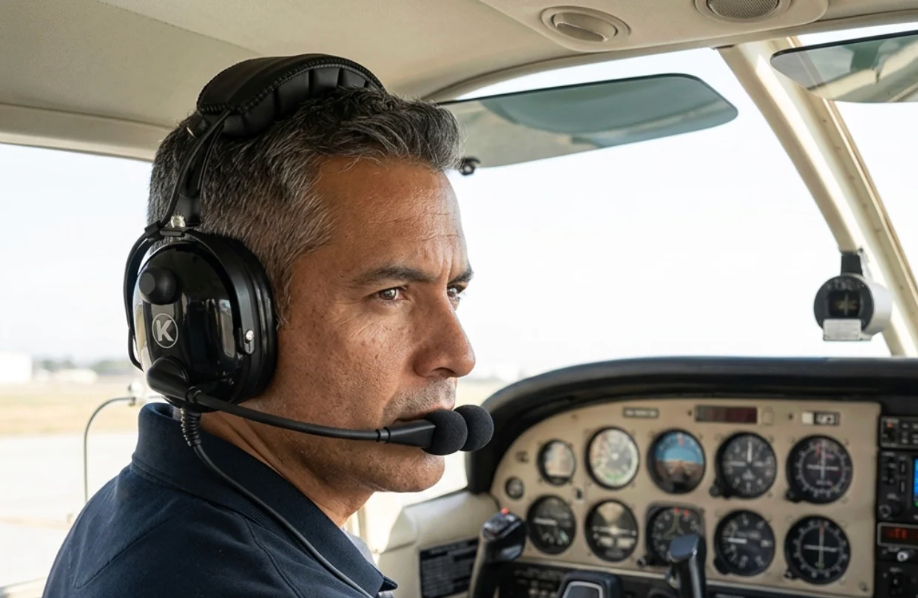
KORE Aviation - Planning your first long distance trip is a major milestone in flight training. For the Private Pilot License, you need to complete a solo cross country flight of at least 150 nautical miles with full stop landings at three different airports. While that sounds like a simple requirement, it often translates to three or four hours in the cockpit. Many experienced pilots regularly fly legs that last five or six hours. During these long stretches, your gear is tested in ways that a quick one hour session in the traffic pattern simply cannot replicate. Finding the best headset for cross country flight becomes less about the price tag and more about how your head feels during the fourth hour of engine noise.
When you are flying locally, you can tolerate a lot of minor annoyances. A slightly tight headband or a small gap in the ear seal does not matter much when you are back on the ground in forty five minutes. On a long cross country, those minor annoyances turn into significant distractions. Fatigue is a silent safety risk in aviation. It slows your reaction time and degrades your decision making. A comfortable headset is not just a luxury. It is a piece of safety equipment that helps you stay sharp until the final landing of the day.
Why Comfort is the Top Priority for Aviation Headset Endurance
Aviation headset endurance is a term pilots use to describe how long a headset remains wearable before it becomes painful. On a long flight, comfort is the absolute priority. If you are constantly adjusting your ear cups or rubbing your temples to relieve pressure, you are not focusing on your navigation or your fuel management. There are three main factors that determine the comfort level of a headset over a long duration: weight, clamping force, and the quality of the ear seals.
Weight is a major contributor to neck fatigue. Many budget PNR headsets weigh between 14 and 18 ounces. While a few ounces might seem negligible, the human neck feels every bit of that weight after several hours of scanning for traffic and looking down at charts. Lighter headsets reduce the strain on your cervical spine. If you are flying a four hour leg, a headset that weighs 15 ounces is much easier to live with than a bulky 20 ounce model. Every ounce matters when you are fighting turbulence or maintaining a steady altitude for hours on end.
The Role of Gel Ear Seals in Long Distance Flying
If you want the best headset for cross country flight, you must look at the ear seals. Most entry level headsets come with foam ear seals. Foam is inexpensive and works well for short flights, but it has a major drawback. Over time, foam compresses and loses its ability to spring back. After two hours, those foam pads can feel flat against your skull, allowing the hard plastic of the ear cup to press against your ears. This creates hot spots that can become incredibly painful.
Gel ear seals are an absolute game changer for long flights. Unlike foam, silicone gel does not compress flat. It conforms to the shape of your head and maintains its thickness throughout the entire flight. This provides a consistent cushion and a superior acoustic seal. Even if you wear sunglasses, gel seals mold around the frames to prevent noise leaks. The KORE Aviation KA-1 comes standard with high density gel seals for this exact reason. It ensures that the comfort you feel at takeoff is the same comfort you feel when you are on a five mile final at your destination.
Managing Clamping Force and Pressure Points
Clamping force is the amount of pressure the headband applies to hold the ear cups against your head. You need enough pressure to create a seal against the 100 decibel roar of a Lycoming or Continental engine, but too much pressure leads to headaches. This is often called the "vice grip" effect. On a long cross country, a headset with excessive clamping force will cause pain in the jaw and temples.
The best headset for cross country flight will feature an adjustable stainless steel headband. This allows you to fine tune the fit. You want the headset to be snug enough that it does not slide around when you move your head, but light enough that you forget you are wearing it. High quality PNR headsets like the KA-1 use a flexible design that balances noise attenuation with physical comfort. This balance is critical for maintaining your focus during complex transitions through busy airspace.
Noise Fatigue and Hearing Protection
Even with a good headset, you are exposed to constant noise. A typical general aviation cockpit produces noise levels between 90 and 105 decibels. A Passive Noise Reduction (PNR) headset typically provides about 24 dB of attenuation. This brings the noise down to roughly 65 to 75 dB. While this is safe, the constant "hum" still causes noise fatigue. The brain has to work harder to process information when it is filtering out background noise.
The FAA Advisory Circular AC 91-35 warns pilots about the cumulative effects of noise. Pilots who fly more than three hours per week are at a higher risk for gradual hearing loss if they do not use proper protection. Better noise reduction leads to less fatigue. When you can hear the engine clearly without the deafening roar, you arrive at your destination feeling much more refreshed. This is why investing in a headset with a high Noise Reduction Rating (NRR) is essential for cross country flying.
| Feature | KORE Aviation KA-1 | Standard Budget Headset |
|---|---|---|
| Noise Reduction | 24 dB PNR | 20-22 dB PNR |
| Ear Seals | High-Density Gel | Basic Foam |
| Weight | 15 oz | 18+ oz |
| Warranty | 5 Years | 1 Year |
| Price | $224.95 | $130.00 - $160.00 |
Communication Endurance and Audio Clarity
On a long cross country flight, you are not just talking to a local tower. You are likely interacting with multiple Approach and Center controllers. You might be switching frequencies every twenty minutes. Clear audio is vital for communication endurance. If the audio quality is poor, you will find yourself asking controllers to repeat instructions. This is fatiguing, distracting, and can lead to errors in high pressure situations.
A high quality electret microphone with a noise canceling element ensures that the controller hears you clearly, even in a noisy cockpit. The best headset for cross country flight provides crisp, clear audio that allows you to understand instructions the first time. This reduces the mental workload, allowing you to focus on flying the airplane and staying ahead of the navigation.
The Reliability of PNR for Long Distance Trips
Many pilots consider premium ANR headset brands for long flights because of their active noise canceling technology. However, ANR headsets rely on batteries. Most require two AA batteries that last between 20 and 40 hours. While that sounds like a lot, it is easy to forget to check your battery levels before a long trip. If your batteries die mid-flight, an ANR headset falls back to its passive rating, which is often lower than a dedicated PNR headset.
The KORE Aviation KA-1 is a PNR headset, meaning it requires no batteries to function. This provides a level of reliability that is perfect for cross country flying. You never have to worry about your noise reduction failing over the middle of a desert or a mountain range. At a price point of $224.95, the KA-1 offers the 24 dB noise reduction and gel seal comfort of much more expensive units without the battery anxiety. For pilots on a budget or those who value simplicity, a high end PNR headset is often the smarter choice for long distance travel.
Practical Tips for Headset Comfort on Long Flights
Even with the best headset for cross country flight, you should follow a few practical tips to stay comfortable. First, make it a habit to slightly adjust the position of your headset every hour. Moving the headband forward or backward by half an inch can shift the pressure points and prevent soreness. Second, clean your ear seals during fuel stops. Sweat and oil can make the seals slippery or irritating against your skin. A quick wipe with a damp cloth makes a big difference.
If you are planning a multi-day trip, consider bringing a backup set of ear seals. While gel seals are durable, having a spare set ensures that a mechanical failure or a leak does not ruin your trip. Also, pay attention to how your sunglasses interact with your headset. Thin, flat temples are best for maintaining the acoustic seal and preventing the headset from pushing the glasses into your head.

Why the KA-1 is Built for the Long Haul
The KORE Aviation KA-1 was designed with the endurance pilot in mind. It features a dual GA plug setup that is compatible with almost every civilian aircraft. The 5-year warranty provides peace of mind for pilots who fly frequently. With over 30,000 pilots trusting KORE and partnerships with more than 50 flight schools, the KA-1 has been proven in the most demanding environments. It combines the essential features of a professional tool with a price that is accessible for student pilots and seasoned aviators alike.
Whether you are navigating a complex 300 mile route or just enjoying a scenic flight to a neighboring state, your headset is your primary interface with the aircraft and the world outside. Choosing a headset that prioritizes comfort, clear communication, and reliability will make every mile of your cross country journey more enjoyable and safer.
Frequently Asked Questions
1. How long do gel ear seals last compared to foam?
Gel ear seals typically last much longer than foam. While foam can start to degrade or lose its shape within six months of heavy use, high quality gel seals can last several years if they are kept clean and stored away from extreme heat.
2. Is 24 dB of noise reduction enough for a loud cockpit?
Yes, 24 dB is the industry standard for high quality passive noise reduction. It effectively brings cockpit noise down to a level where you can communicate clearly and protect your hearing during long flights.
3. Can I use the KA-1 in a helicopter?
The KA-1 comes with dual GA plugs (PJ-055 and PJ-068). Most helicopters use a single U-174 plug. You would need a specific adapter to use this headset in a helicopter, but it is natively designed for fixed wing aircraft.
4. Why should I choose PNR over ANR for cross country flights?
PNR is often preferred for its reliability. There are no batteries to fail, and the headsets are generally more rugged. For many pilots, the significant cost savings of a PNR headset like the KA-1 allow them to spend more money on fuel and flight hours.
5. Does the weight of the headset really matter that much?
Absolutely. On a short flight, you won't notice a 3 ounce difference. After four hours of flight time, that extra weight can lead to significant neck strain and tension headaches, which contributes to overall pilot fatigue.
Bottom Line
The best headset for cross country flight is the one that keeps you comfortable, protects your hearing, and lets you stay focused from takeoff to touchdown. Features like balanced weight, moderate clamping force, high-quality gel ear seals, clear audio, and dependable noise reduction all play an important role in reducing fatigue during long hours in the cockpit. While every pilot has different preferences, choosing a headset designed for extended wear can make a noticeable difference in both comfort and situational awareness on longer flights. If you're looking for a dependable option that balances comfort, durability, and value, the KORE Aviation KA-1 offers 24 dB of passive noise reduction, premium gel ear seals, a lightweight design, and a 5-year warranty, making it a practical choice for student pilots and experienced aviators planning longer cross country flights.


