

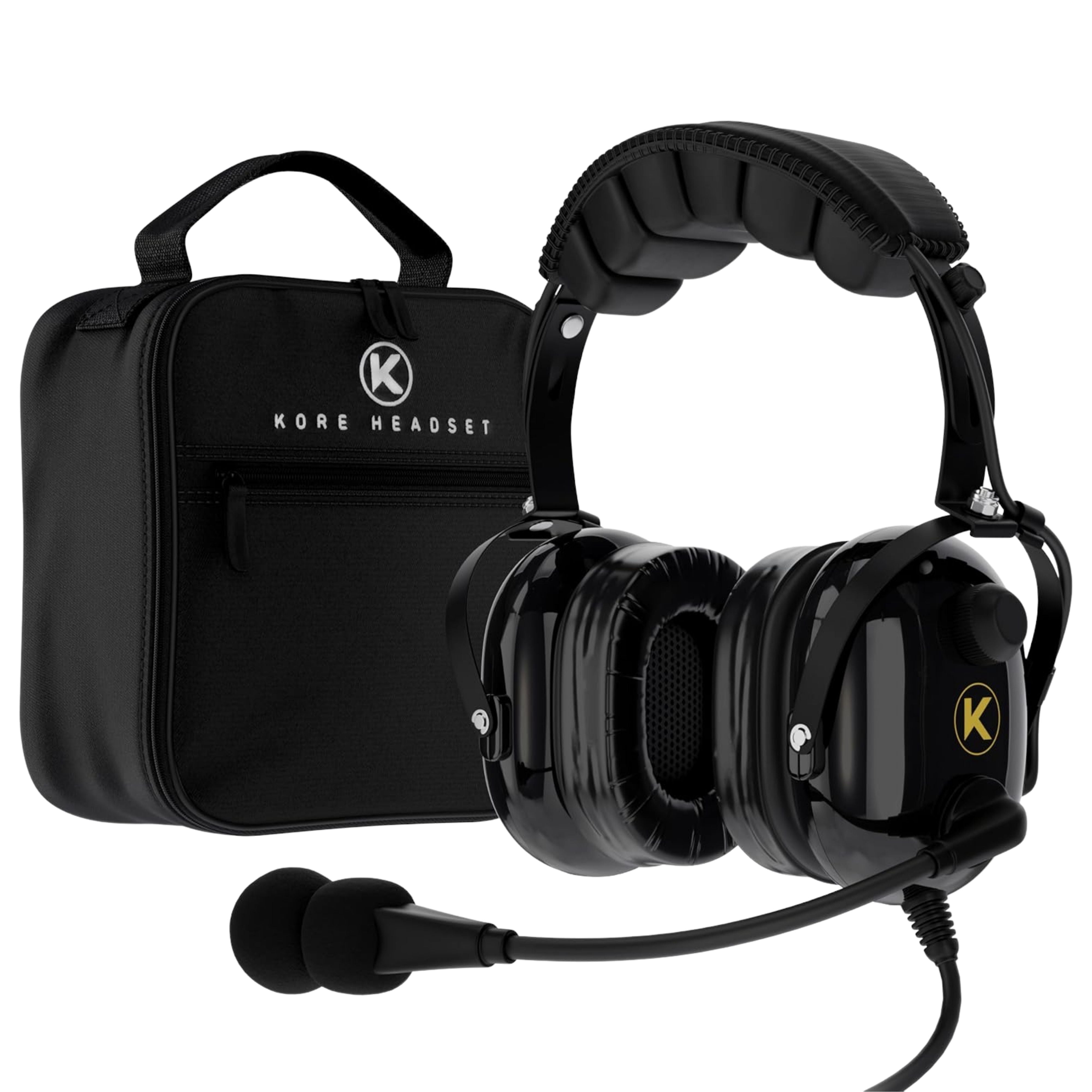
KORE Aviation - When it comes to high stakes communication, not all headsets are built the same. What is the difference between an aviation headset and a normal headset? The answer lies in design, functionality, and performance under demanding conditions.
Unlike standard headphones meant for casual use, aviation headsets are engineered to support critical communication in high-noise environments, such as aircraft cockpits. Understanding these differences is essential, especially for aspiring pilots or aviation enthusiasts.
Key Design Differences Between Aviation and Normal Headsets
Noise Reduction Capabilities
- Aviation headsets feature Active Noise Reduction (ANR) and Passive Noise Reduction (PNR) technology to filter out engine noise.
- Normal headsets typically lack advanced noise-canceling capabilities tailored for aviation.
Microphone Design and Audio Clarity
- Aviation headsets come with noise canceling boom microphones designed for crystal-clear communication.
- Regular headsets are built for entertainment or basic voice calls, often lacking clear transmission features.
Comfort and Wear Duration
Built for Long Flights
- Aviation headsets are ergonomically designed with thick padding and lightweight materials to reduce fatigue.
- Normal headsets may cause discomfort over extended periods.
Adjustable Fit and Pressure Distribution
- Many aviation headsets offer adjustable tension controls to relieve pressure on the ears.
- Regular headsets rarely provide customizable fit options.
Connectivity and Compatibility
Cockpit Integration
- Aviation headsets are compatible with aviation radio systems, intercoms, and cockpit jacks.
- Standard headsets use 3.5mm jacks or Bluetooth, making them incompatible with aircraft systems.
Dual Plug vs. Single Plug
- Aviation headsets often use PJ plugs or U174 connectors.
- Normal headsets have a single TRS/TRRS plug or USB-C port.
Durability and Safety Standards
Certified for Aviation Use
- Aviation headsets comply with FAA or EASA safety regulations.
- Regular headsets don’t meet aviation safety standards.
Built to Withstand Extreme Conditions
- Designed to perform in high-altitude, low-pressure environments.
- Typical headsets aren’t tested under such conditions.
When Should You Choose an Aviation Headset?
If you’re:
- Training as a pilot or flight student
- A licensed pilot flying regularly
- A flight instructor or part of aviation operations
Then investing in an aviation headset is critical for:
- Clear communication
- Hearing protection
- Long-term comfort
Discover More: https://www.koreheadset.com/blogs/blog/best-aviation-headset-guide
Cost Comparison: Are Aviation Headsets Worth It?
While aviation headsets are more expensive, the benefits are undeniable:
- Enhanced communication reliability
- Noise protection in high-decibel environments
- Longevity and comfort during long flights
Internal vs External Resources
For a beginner pilot’s guide, check out our pilot training essentials.
For technical specifications, see the FAA’s guide on headset requirements.
Conclusion: The Clear Winner in the Skies
In summary, what is the difference between an aviation headset and a normal headset? Aviation headsets are superior in terms of noise reduction, comfort, durability, and communication clarity. For anyone involved in flight, they are a non-negotiable tool.
Ready to upgrade your cockpit experience? Discover top-rated aviation headsets at KORE Aviation.
FAQs
- Can I use a normal headset in an aircraft cockpit? No, standard headsets are not compatible with aviation communication systems.
- Are aviation headsets Bluetooth-enabled? Some models feature Bluetooth for music and phone calls, but primary communication still uses aviation connectors.
- Do aviation headsets reduce hearing loss? Yes, thanks to ANR and PNR technologies designed to protect hearing
- Is an aviation headset mandatory for student pilots? While not legally required in all cases, they’re strongly recommended for training
- How long do aviation headsets last? With proper care, they can last over a decade, making them a smart investment.


