

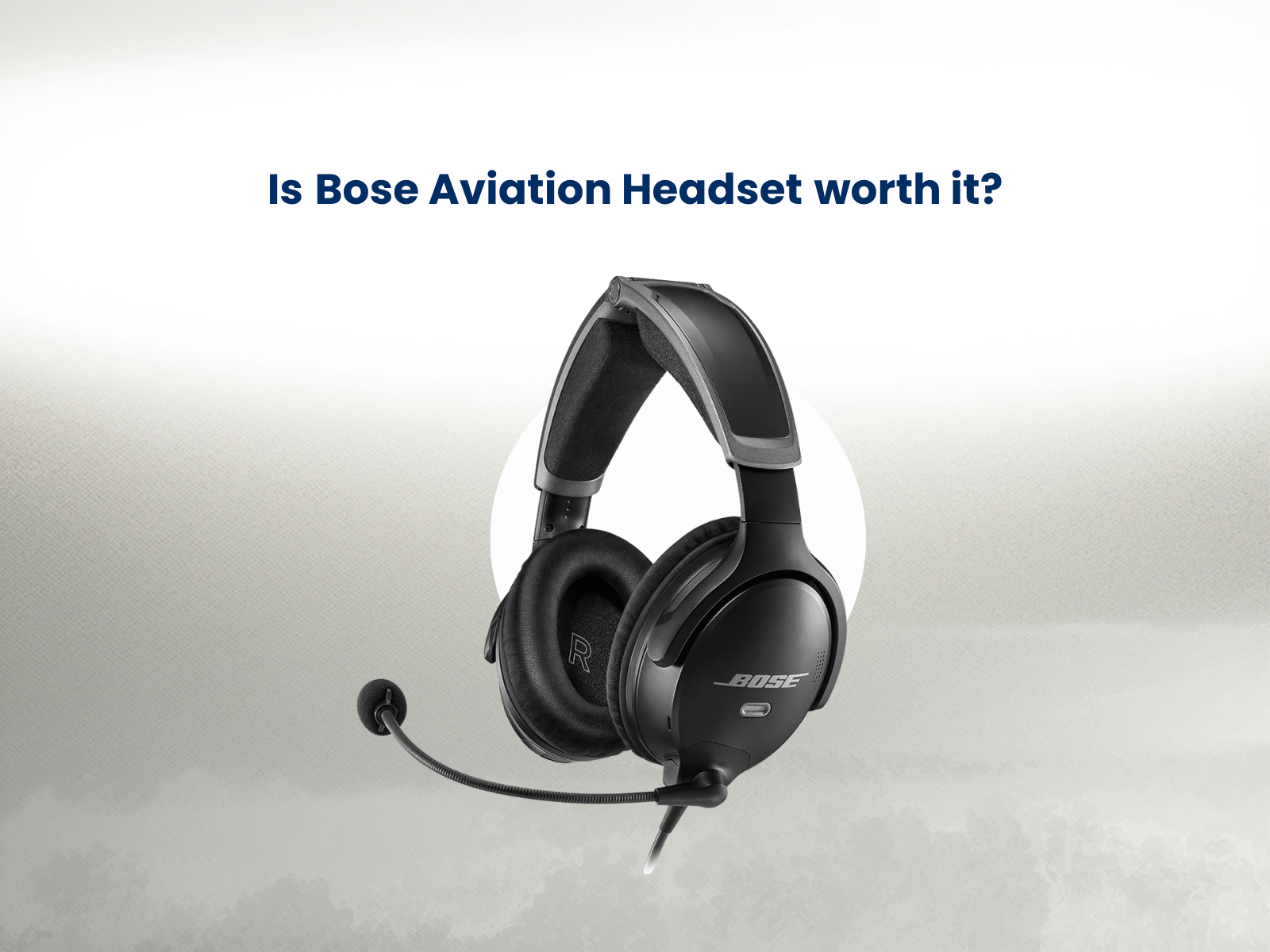
Is a Bose Aviation Headset Worth It for a Student Pilot?
A lot of student pilots end up looking at a Bose aviation headset pretty early in the buying process. That makes sense. Bose is one of the best known names in aviation headsets, and the A30 gets a lot of attention. It looks premium, it feels premium, and it sits near the top of a lot of comparison lists.
But once the first reaction wears off, most student pilots end up asking a more practical question: is it really worth spending that much while you are still in training?
For some people, maybe. For a lot of others, maybe not.
That is really what this comes down to. The question is not whether the Bose A30 is a good headset. It is. The better question is whether it makes sense for the kind of flying you are doing right now.
If you are still working on your private pilot certificate, chances are you are flying shorter lessons in a training airplane, watching your budget, and trying to make smart choices that help you progress. In that situation, a premium headset is not always the most practical answer.
Why So Many Pilots Start by Looking at Bose
There is a reason the Bose aviation headset gets so much attention.
The A30 offers active noise reduction, a lighter feel than many people expect, and the kind of comfort that pilots tend to appreciate on longer flights. Bose also has strong name recognition. Even people who are brand new to aviation usually know the name before they know much about the rest of the headset market.
That matters, especially for student pilots. When you are buying gear for the first time, familiar brands feel safer. You naturally assume they must be the best choice.
Sometimes they are. But sometimes they are simply the most visible choice.
That is why it helps to step back and ask what you actually need in a headset during training.
Do Student Pilots Really Need ANR?
In many cases, not really.
Active noise reduction can make the cockpit feel quieter, and that is nice. But most student pilots are not flying long cross country trips every week. They are usually doing shorter flights in common trainers like the Cessna 172 or Piper Cherokee.
In that kind of environment, a good passive headset is often enough.
That matters because student pilots are not just buying a headset. They are managing a training budget. That budget usually needs to cover:
- aircraft rental
- instructor time
- ground school
- books and supplies
- written test prep
- checkride fees
- flight gear
A premium headset can take a big bite out of that budget.
That does not mean it is a bad headset. It just means that the money you spend on one thing has to come from somewhere else. For a lot of student pilots, extra flight time ends up being the better investment.
A Simpler Way to Think About It
Most student pilots do not need to overcomplicate this.
A good training headset usually comes down to three things.
First, can you hear clearly?
You need to hear your instructor, your radio calls, and the intercom without constantly straining.
Second, can you wear it comfortably for regular lessons?
A headset that feels fine at first can start to bother you after an hour or two in the airplane.
Third, does it fit your budget?
Training is expensive enough already. Most students are not looking for the most expensive option. They are looking for one that works well and makes sense.
If a headset checks those boxes, it is worth serious consideration.
Bose A30 vs Other Common Headset Options
Here is a simple overview of how some common headset options compare.
| Headset | Type | Noise Reduction | Ear Seals | AUX Input | Stereo | Warranty | Approximate Price |
|---|---|---|---|---|---|---|---|
| Bose A30 | ANR | Around 30 dB | Gel | Yes | Yes | 5 years | Around $1,249 |
| Lightspeed Zulu 3 | ANR | Around 30 dB | Gel | Yes | Yes | 5 years | Around $899 |
| David Clark H10 13.4 | PNR | 23 dB | Foam | No | No | 5 years | Around $400 to $450 |
| KORE Aviation KA-1 | PNR | 24 dB | Gel included | Yes | Yes | 5 years | Around $220 |
| Rugged Air RA200 | PNR | Around 23 dB | Foam | No | No | 1 year | Around $99 |
Once you look at the broader market, the choice becomes a little easier to understand. There is a big gap between a very basic entry level headset and a premium ANR model. That middle ground is where many student pilots end up finding the best fit.
What Student Pilots Usually Need Most
For a student pilot, the best headset is usually not the one with the most marketing around it. It is the one that works well every time you go to the airport.
That usually means:
- enough noise reduction for training aircraft
- comfort that holds up over repeated lessons
- decent build quality
- a price that does not feel out of line with the rest of your training costs
That is why a good passive headset in the value tier makes so much sense for so many students.
You are not settling for the cheapest thing you can find, but you are also not paying premium money before you really know whether you need premium features.
Where the KORE Aviation KA-1 Fits
This is where the Kore Aviation KA-1 starts to make sense for student pilots.
It sits in that middle ground between entry level and premium. It is not trying to be a luxury headset. It is trying to be a practical one.
The KA-1 includes:
- 24 dB passive noise reduction
- silicone gel ear seals
- stereo support
- AUX input
- independent volume controls
- a 5 year warranty
Those are the kinds of things that matter when you are actually using the headset week after week.
What makes the KA-1 interesting is not that it is trying to go head to head with the Bose A30 on every feature. It is not. They are built for different budgets and different buying priorities.
What makes it worth looking at is that it covers the things a lot of student pilots care about most:
- comfort during regular lessons
- clear audio
- solid passive noise reduction
- useful everyday features
- a price that feels easier to justify during training
For a student pilot, that can feel like the smarter and more grounded choice.
The Price Question Matters More Than People Admit
This part of the decision is usually more personal than people like to admit.
A premium headset may absolutely be worth it for some pilots. But student pilots are rarely shopping in a vacuum. They are making tradeoffs.
The money spent on a headset could also go toward:
- more dual instruction
- solo practice
- ground school materials
- checkride prep
- another lesson or two during a slow month
That is why this decision is not just about headset features. It is about where you want your training money to go.
For some pilots, spending more on a premium ANR headset feels right. For a lot of student pilots, a strong passive headset simply makes more sense at this stage.
When a Bose Aviation Headset Does Make Sense
To be fair, there are situations where the Bose aviation headset may be the right call.
For example, it may make more sense if:
- you fly often and spend a lot of time in the cockpit
- you already know you want premium gear
- your budget is comfortable enough that the price does not affect your training plan
- you expect to keep flying regularly long after your checkride
Those are all reasonable reasons.
But if you are still in early training, it is worth asking whether the extra cost is solving a real problem right now, or whether it is simply more than you need.
A More Practical Way to Decide
Instead of asking, “Is the Bose headset worth it?” a student pilot might get a better answer by asking:
What kind of flying am I doing right now?
How often am I actually flying?
What do I need most from a headset today?
Would I rather put more of my money into gear or into time in the airplane?
That line of thinking usually leads to a more balanced decision.
For a lot of student pilots, that decision lands in the value tier. That is where a headset gives you real comfort and usability without putting too much pressure on your training budget.
The Bottom Line
The Bose aviation headset has a clear place in aviation, and for some pilots it may absolutely be the right fit. But that does not automatically make it the best choice for a student pilot.
For many people still working through training, a strong passive headset is simply the more practical option. It handles the basics well, keeps communication clear, and leaves more room in the budget for the one thing that matters most during training, which is flight time.
That is why the Kore Aviation KA-1 is worth considering. It gives student pilots a solid mix of comfort, passive noise reduction, and useful everyday features without pushing them into premium price territory.
For a lot of student pilots, that is a very good place to start.
Frequently Asked Questions
Is a Bose aviation headset worth it for a student pilot?
It can be, but not always. For many student pilots, a quality passive headset is enough for normal training flights, and the money saved can go toward more flight time.
Do I need ANR to train in a Cessna 172?
Not necessarily. Many students complete training in common piston aircraft using passive headsets without any issue.
What matters most in a student pilot headset?
Most students care most about comfort, clear audio, reliable build quality, and a price that fits their training budget.
How does the KORE Aviation KA-1 compare to more expensive headsets?
It is not trying to match a premium ANR headset feature for feature. Its strength is that it offers a practical combination of comfort, passive noise reduction, and useful features at a more approachable price.
Should I spend more on a headset or on flight hours?
For many student pilots, extra flight time does more for training progress than spending top dollar on a headset early on.
Can I keep using a passive headset after training?
Yes. A lot of pilots keep using a good passive headset for years after training, especially for local flights, rental aircraft, and as a backup.
Check Out KORE Aviation
If you are comparing headset options and want something that feels like a real step up from the most basic entry level choices, take a look at KORE Aviation. For many student pilots, it sits in a practical middle ground with the comfort and features that matter during training.


