

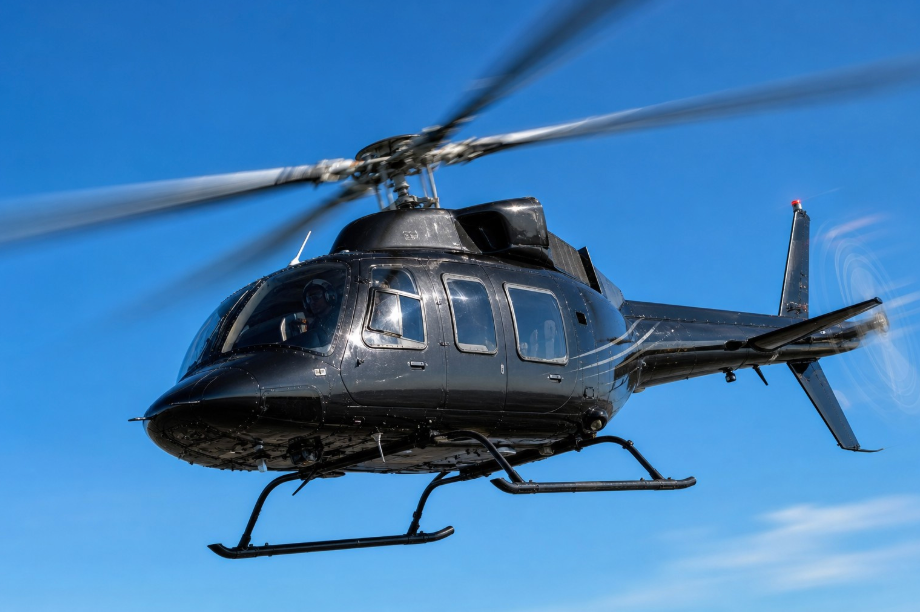
KORE Aviation - When you watch a rescue helicopter streak across the sky or a news chopper hovering above traffic, you might wonder how fast does a helicopter fly. The short answer is that most conventional helicopters cruise comfortably between 90 and 150 knots, which translates to roughly 104 to 172 miles per hour. But rotorcraft flight is governed by complex aerodynamics that place strict physical ceilings on how fast these machines can push through the air. If you are stepping into a cockpit for flight training, understanding helicopter speed is just as important as mastering your hovering technique. Let us look at what makes these incredible machines move, how different models compare, and why you will never see a helicopter keeping pace with a commercial jetliner.
How Fast Does a Helicopter Fly Across Different Categories?
Helicopter speed varies dramatically depending on the size, engine power, and blade design of the aircraft. To make sense of the numbers, aviation pilots generally break rotorcraft down into specific weight and utility categories. Light training helicopters sacrifice top speed for stability and fuel efficiency. Medium utility ships balance cabin space with respectable cruise velocity. Heavy transport and military workhorses pack massive turbine power to haul heavy payloads across long distances.
To understand how fast does a helicopter fly in real world operations, examine the cruise and maximum speeds of these common aircraft models:
| Helicopter Model | Category | Cruise Speed | Maximum Speed (VNE) |
|---|---|---|---|
| Robinson R22 | Light / Training | 75 to 90 knots | 102 knots |
| Robinson R44 | Light / Utility | 100 to 110 knots | 130 knots |
| Bell 206 JetRanger | Medium / Utility | 115 to 125 knots | 130 knots |
| Sikorsky S-76 | Heavy / Corporate | 145 to 155 knots | 178 knots |
| UH-60 Black Hawk | Military / Transport | 150 knots | 159 knots |
| AH-64 Apache | Military / Attack | 150 knots | 164 knots |
Notice how the numbers cluster tightly around 100 to 150 knots. Even as engine technology improves, conventional helicopters hit a hard aerodynamic wall in this speed range.

Why Helicopters Are Slower Than Airplanes
People often ask why helicopters cannot match fixed wing aircraft. A standard single engine airplane like a Cessna 172 cruises around 120 knots, while faster turboprops push past 300 knots. Jets cruise near 500 knots. Meanwhile, helicopter top speed rarely exceeds 160 knots in standard production models.
The limitation comes down to how lift is generated. An airplane gets its lift from fixed wings moving forward through the air. The faster the airplane goes, the more lift the wings produce. A helicopter gets its lift from rotating blades. As the helicopter moves forward, the rotor blade moving in the same direction as the flight path is called the advancing blade. The blade moving in the opposite direction is the retreating blade.
This creates two massive aerodynamic problems at higher forward speeds. First, the advancing blade encounters compressibility effects as its rotational speed plus the forward speed of the aircraft approaches the speed of sound. This creates destructive shockwaves on the blade tip. Second, and more critically, the retreating blade experiences a loss of airspeed. To maintain lift, the helicopter must pitch the retreating blade up significantly. Eventually, the blade reaches a point where it stalls entirely. This phenomenon is known as retreating blade stall, and it causes violent vibrations, loss of control, and a sharp drop in lift.

Understanding VNE and Helicopter Limits
Every pilot must respect VNE, which stands for Velocity Never Exceed. This is a hard red line on the airspeed indicator. If you push a helicopter past its VNE, you risk structural failure, extreme rotor blade flapping, or catastrophic loss of control due to retreating blade stall.
In a training environment, student pilots learn to monitor airspeed religiously, especially during descents or when flying with tailwinds. High density altitude, turbulence, and heavy gross weights all lower the actual VNE of the aircraft. Operating a helicopter requires constant vigilance over performance charts.
Cockpit noise also scales with engine and rotor speed. When you are inside a training helicopter like a Robinson R22, the cabin roar and engine vibrations are intense. Protecting your hearing is nonnegotiable. Many flight students choose the KORE Aviation KA-1 for their initial helicopter training. At $224.95, it delivers 24 dB of noise reduction and comes equipped with comfortable gel ear seals and a 5-year warranty. Because it uses dual GA plugs, students flying helicopters with standard adapter setups can plug right in. Over 30,000 pilots trust KORE, and the brand partners with more than 50 flight schools nationwide. If you prefer a simpler backup option, the KORE P1 offers reliable passive noise reduction for $124.95 with a 1-year warranty.

Factors Affecting Helicopter Speed and Performance
Two helicopters of the exact same model can experience drastically different performance numbers on any given day. Atmospheric conditions and loading configurations change how fast a helicopter can fly safely.
Density altitude is public enemy number one for helicopter performance. As temperature and humidity rise, air density drops. Thin air means the engine must work harder to produce power, and the rotor blades must bite harder into the air to generate lift. On a hot summer afternoon at a high elevation airport, your cruise speed and maximum altitude drop noticeably compared to a crisp winter morning.
Aircraft weight also plays a major role. Flying at maximum gross weight with full fuel tanks and four passengers requires a higher blade pitch, which increases aerodynamic drag and saps available engine power. Strong head winds eat into your ground speed, while tailwinds give you a deceptive boost in travel time without changing your true airspeed.
Why Helicopters Are Slower and How Fast Does a Helicopter Fly Safely?
While traditional helicopters cap out around 150 knots, aerospace engineers have spent decades trying to break through the traditional speed barrier. The quest for the fastest helicopter has led to revolutionary compound designs that combine traditional main rotors with auxiliary wings and pusher propellers.
In 2013, the Eurocopter X3 experimental compound helicopter smashed records by hitting an incredible 255 knots, which equals 293 miles per hour. Shortly before that, the Sikorsky X2 reached 250 knots. These experimental aircraft use dual counter rotating main rotors to eliminate retreating blade stall and add a rear propeller for thrust. While these designs remain largely experimental or military adjacent, they prove that rotorcraft can achieve impressive velocities when freed from the constraints of single rotor physics.
Pilots always calculate how fast does a helicopter fly based on density altitude and weight limits before every departure. When flight instructors teach students how fast does a helicopter fly during cross country navigation, they emphasize wind correction angles and fuel burn rates. Before you check how fast does a helicopter fly on a flight planning app, remember that actual atmospheric conditions dictate your real world performance. Knowing how fast does a helicopter fly helps with accurate arrival times, and every aircraft manual outlines how fast does a helicopter fly under standard atmospheric conditions.
Ready for Your Next Flight Training Lesson?
Protect your hearing with the KORE Aviation KA-1 passive noise reduction headset. Featuring 24 dB noise reduction, gel ear seals, and a 5-year warranty for $224.95.
Shop the KA-1 HeadsetFrequently Asked Questions
1. How fast does a helicopter fly on average?
Most conventional helicopters cruise between 90 and 150 knots, which translates to roughly 104 to 172 miles per hour.
2. What is the fastest helicopter in the world?
The Eurocopter X3 experimental compound helicopter holds one of the highest speed records for rotorcraft, reaching 255 knots or 293 miles per hour in 2013.
3. Why are helicopters slower than airplanes?
Helicopters are limited by retreating blade stall and compressibility issues at the advancing blade tips. Fixed wing airplanes do not experience these rotational aerodynamic limits.
4. What does VNE mean for helicopter pilots?
VNE stands for Velocity Never Exceed. It is the absolute maximum safe airspeed limit for an aircraft, set to prevent structural damage and loss of control.
5. Can I use a standard aviation headset for helicopter flight?
Many standard aviation headsets require a helicopter adapter to fit the lower impedance and different plug type found in rotorcraft. The KORE Aviation KA-1 works great for helicopter training when paired with the correct adapter.
Bottom Line
So, how fast does a helicopter fly? For most conventional helicopters, the answer is roughly 90 to 150 knots, depending on the aircraft, weight, weather, and operating conditions. That speed range is shaped by the unique aerodynamics of rotorcraft, especially retreating blade stall, advancing blade compressibility, and VNE limitations. Faster compound helicopters have pushed well beyond those limits, but for everyday training, utility, rescue, and transport operations, pilots focus less on chasing top speed and more on flying safely within the aircraft's performance envelope.
For student pilots, understanding those limits is just as important as learning to hover, navigate, and manage emergencies, and having reliable cockpit communication helps make that training easier to manage from lesson to lesson.


