

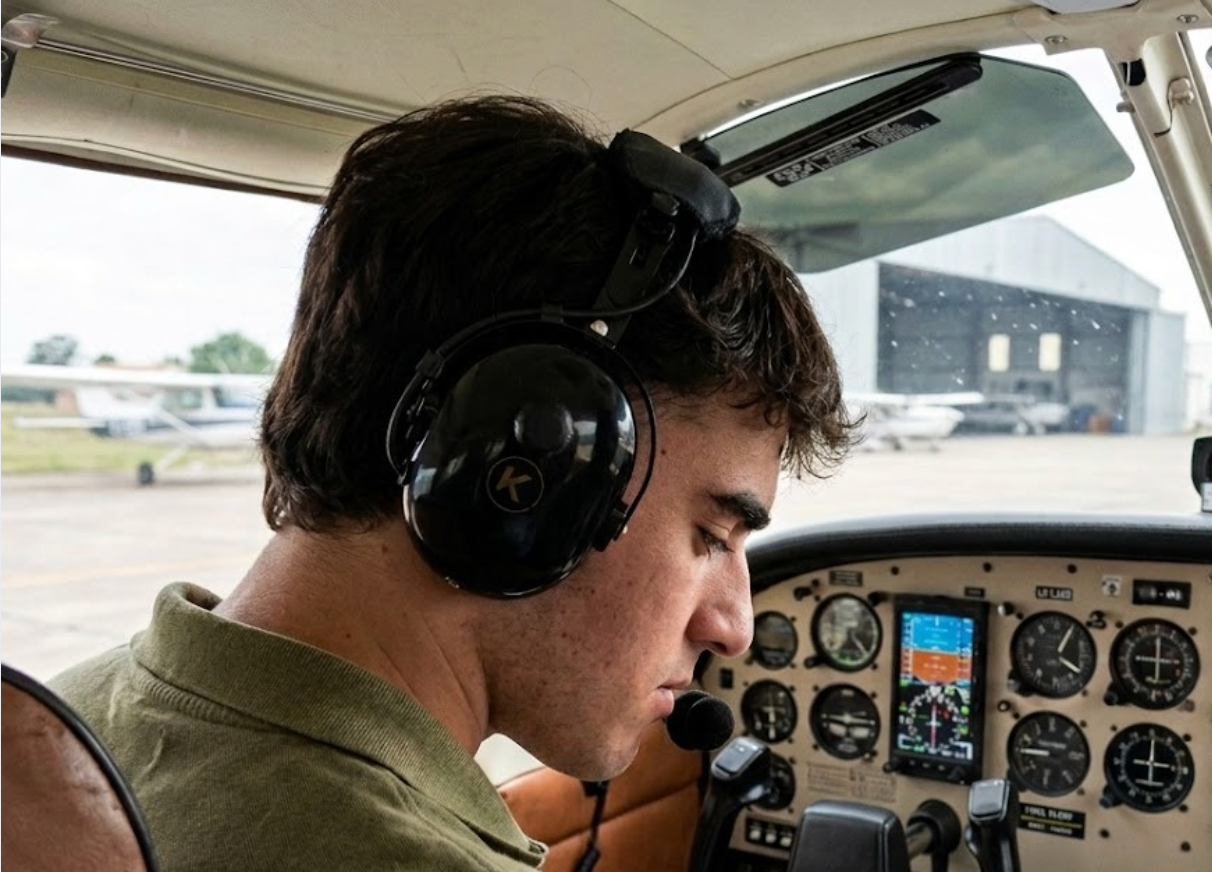
KORE Aviation - Flight training is expensive. A private pilot license runs $15,000 to $20,000 in 2026, and aircraft rental alone eats 65% to 75% of that budget. So when a flight school picks a flight school headset for its student fleet, price is only part of the equation. That headset has to survive being dropped, stuffed into flight bags, and handed off between three students in a single afternoon. It needs to work every single time without batteries dying mid lesson.
That is why more than 30 flight schools across the U.S. and the Philippines chose the same PNR headset for students: a model that costs a fraction of premium ANR alternatives and holds up to the beating that training environments dish out.
The Real Reason Flight Schools Do Not Buy ANR Headsets
Active Noise Reduction headsets use electronic noise cancellation. They use microphones and processors to generate sound waves that cancel out low frequency engine drone. For a private owner flying long cross country legs, that kind of fatigue reduction is worth every dollar.
But flight schools are not buying headsets for one pilot. They are buying 10, 20, sometimes 50 at a time. And ANR headsets create three problems at that scale:
- Battery logistics become a full time job. When you have 20 ANR headsets in rotation, someone has to check and replace batteries constantly. A student grabs a flight school headset with a dead battery 15 minutes before a lesson, and now you are scrambling. PNR headsets eliminate this entirely. No batteries, no charging, no dead headsets.
- Repair costs multiply. ANR headsets have circuit boards, wiring harnesses, and electronic components that can fail. When a student drops one on the ramp (and they will), a PNR headset might scuff the paint. An ANR headset might need a $200 repair. Multiply that across a fleet, and the math stops making sense fast.
- The price difference is staggering. A premium ANR headset costs $900 to $1,300 per unit. A quality PNR flight school headset like the KORE Aviation KA-1 costs $224.95. For the price of 10 ANR headsets, a school could outfit 40 to 55 students with proven PNR gear and have budget left over for fuel.
Also read: PNR vs ANR Headsets: Which Suits Best for Student Pilots?
What Makes a Good Flight School Headset
Not every PNR headset belongs in a flight school. The best headset for flight training checks seven specific boxes:
| Feature | Why It Matters for Schools |
|---|---|
| 22+ dB noise reduction (NRR) | Cessna 152/172 cockpits hit 85 to 100 dB at cruise. Students need clear ATC comms without shouting. |
| Gel or memory foam ear seals | Students fly 1 to 2 hour lessons. Foam seals that flatten after 30 minutes cause headaches and distraction. |
| Standard dual GA plugs | 90%+ of training aircraft use the standard twin plug setup. No adapters means no lost parts. |
| Adjustable headband | Students range from 18 year old cadets to 50 year old career changers. One size fits most is essential. |
| 3+ year warranty | With daily use across multiple students, gear wears faster. A short warranty is a dealbreaker. |
| Under $250 per unit | Schools operate on tight margins. Every dollar saved on headsets is a dollar available for aircraft maintenance. |
| Included carrying case | Loose headsets get damaged. A bag keeps them organized between flights and extends their life. |
NRR = Noise Reduction Rating, measured in decibels (dB). GA = General Aviation. Training cockpit noise levels vary by aircraft model and engine type.
The KORE Aviation KA-1 checks every one of these boxes. It delivers 24 dB of passive noise reduction, comes with gel ear seals (not the foam pads you typically get at this price), includes a padded headset bag, and carries a 5 year warranty. At $224.95, it hits the price point that makes bulk purchasing realistic.
Also read: What to Look for in a Pilot Headset Bag
Flight School Headset Buying Checklist for New Student Pilots
Before purchasing any flight school headset, ask these questions:
- Does it provide at least 22 dB noise reduction?
- Is the headset comfortable for two hour lessons?
- Does it use standard dual GA plugs?
- Does it include a carrying bag?
- Is the warranty at least three years?
- Are replacement parts easy to find?
- Can it serve as a backup headset later in your career?
This checklist helps students avoid buying a headset based only on price.
The PNR vs ANR Cost Breakdown for Flight Schools
After evaluating comfort, noise reduction, durability, and compatibility, the next question becomes simple: what does a flight school headset actually cost over time?
For student pilots, the purchase price is only part of the equation. Flight schools must also consider maintenance, replacement costs, warranty coverage, and long term ownership expenses when choosing headsets for an entire training fleet.
Numbers tell the story better than opinions. Here is what it actually costs to equip a 10 aircraft flight school with headsets for students and instructors.
| Cost Factor | PNR Fleet (KA-1) | Premium ANR Fleet |
|---|---|---|
| Unit price | $224.95 | $900 to $1,300 |
| 20 headsets (2 per aircraft) | $4,499 | $18,000 to $26,000 |
| Annual battery cost | $0 | $200 to $400 (AA cells) |
| Avg. repair cost per unit/year | ~$15 (ear seal replacement) | ~$80 to $150 (electronics + seals) |
| Annual fleet maintenance | ~$300 | $1,600 to $3,000 |
| 5 year total cost of ownership | ~$5,999 | $22,000 to $37,000+ |
| Warranty coverage | 5 years | 2 to 5 years (varies) |
Footnotes: Estimates based on a fleet of 20 headsets for a 10 aircraft Part 61/141 school. PNR repair costs cover ear seal and headband padding replacements. ANR repair costs include electronic component and battery compartment failures. Actual costs vary by usage intensity.
That is a difference of $16,000 to $31,000 over five years for a single flight school. Put that money toward aircraft maintenance, fuel, or instructor pay and the school runs better for everyone.
For schools that want to pass savings directly to students, the KORE Aviation KA-1 Group Pack pricing brings the cost down even further. Buy 2 and save 15%. Buy 4 or more and save 25%. Flight clubs and student cohorts can split an order and each walk away with a premium PNR flight school headset for under $170.
Also read: Flight School Headset Programs: What Flight Schools Need to Know
Why 30+ Flight Schools Partnered with KORE Aviation
The FAA counted 370,286 active student pilots at the end of 2025, up from 222,629 in 2020. That is a 66% increase in five years. Flight schools are onboarding students faster than ever, and they need headset solutions that scale.
KORE Aviation built its flight school headset partnership program specifically for this demand. Over 30 schools and training organizations now use KORE Aviation headsets as part of their standard training kits, including:
- Skyfarer Academy (New Jersey), connecting students with certified flight instructors
- Short Final Aviation (Arkansas/Missouri), providing KA-1 headsets for student training and discovery flights
- Jet Access Flight Training, using KORE Aviation as their official headset partner
- Pitcairn Flight Academy, equipping student pilots with KA-1 headsets
- Costanzo Air Flight School, choosing KORE Aviation for durability and value
- Leaf Air (Upstate New York), outfitting students with KORE Aviation gear from day one
- Philippine flight schools through Harris Aviation Solutions, where the KA-1 is now included in standard pilot starter kits
These are not sponsorship deals where a logo goes on a wall. These schools actively put KORE Aviation headsets in the hands of their students because the flight school headset performs and the price makes sense at scale. Over 30,000 pilots now trust KORE Aviation for their training and flying.
Also read: KORE Aviation Partners with Skyfarer Academy
What Students Actually Need from a Training Headset
If you are a student pilot picking a headset, here is what actually matters during training:
- Clear ATC communication. You are learning to talk to controllers while managing an airplane. Your headset microphone needs to be crisp enough that ATC does not ask you to "say again" every other transmission. The KA-1's noise canceling boom mic handles this in single engine trainers without issues.
- Comfort for 1 to 2 hour flights. Most training flights are under two hours. You do not need the fatigue reduction of a $1,200 ANR headset for pattern work and short cross country flights. What you need is a headset that does not give you a headache after 45 minutes. Gel ear seals and proper headband padding solve that problem at any price point.
- Durability through 50 to 80 hours of training. Your headset will live in your flight bag, get tossed on the seat, and sometimes land on the tarmac. A quality PNR headset for students handles this because there are fewer parts to break. No circuit boards, no battery compartments, no fragile electronics.
- A price that does not eat your flight budget. At $224.95, the KA-1 costs roughly $2.80 to $4.50 per flight hour over a typical PPL course. That is about what you would pay to rent a flight school headset for 20 to 40 flights.
If you complete your private certificate and decide to chase an instrument rating or commercial, you can always upgrade to ANR later and keep your PNR headset as a backup. Every professional pilot carries a backup headset, and a reliable PNR model is the smartest choice for that role.
How to Get KORE Aviation for Your Flight School
KORE Aviation offers wholesale pricing for flight schools, flexible returns with no restocking fees, and warranty coverage that extends to end users.
Students and flight clubs can take advantage of Group Pack pricing: 15% off when you buy 2, 20% off for 3, and 25% off for 4 or more. Every order ships free with a headset bag included.
Frequently Asked Questions
1. What type of headset do most flight schools use?
Most flight schools use PNR (Passive Noise Reduction) headsets for student training. PNR headsets require no batteries, cost significantly less than ANR models, and hold up better in high turnover environments. The KORE Aviation KA-1 is the flight school headset of choice for 30+ training programs across the U.S. and the Philippines.
2. Is a PNR headset good enough for flight training?
Yes. PNR headsets with a noise reduction rating of 22 dB or higher provide adequate hearing protection and clear communication in the single engine trainers used for most flight training (Cessna 152, 172, Piper Cherokee). For training flights of 1 to 2 hours, PNR offers more than enough noise reduction.
3. How much does it cost to equip a flight school with headsets?
With a quality PNR headset like the KA-1 ($224.95), equipping a 10 aircraft school with 20 headsets costs about $4,500. Premium ANR headsets would cost $18,000 to $26,000 for the same fleet. KORE Aviation also offers wholesale pricing for flight school partners, bringing the per unit cost even lower.
4. Should student pilots buy their own headset or rent from the school?
Buying is almost always more cost effective. Headset rental fees of $5 to $15 per flight add up to $250 to $1,200 over a PPL course. The KORE Aviation KA-1 pays for itself within 15 to 45 rental flights and comes with a 5 year warranty, so it will last well beyond your private pilot training.
5. Can I use a PNR flight school headset for my instrument rating and beyond?
Absolutely. Many pilots use PNR headsets through their instrument, commercial, and CFI training. If you eventually upgrade to ANR for long cross country flights, your PNR headset becomes your backup. Every professional pilot should carry a backup headset in case of equipment failure, and a reliable PNR model is the best choice for that purpose.
Bottom Line
Flight schools choose PNR headsets over ANR for student training because of lower cost, zero battery dependency, simpler maintenance, and better durability. The KORE Aviation KA-1 ($224.95) has become the go to flight school headset for 30+ partner schools thanks to its 24 dB noise reduction, gel ear seals, 5 year warranty, and group pricing. A 10 aircraft school saves $16,000 to $31,000 over five years by choosing PNR over a premium ANR fleet. For students, owning a KA-1 costs roughly $2.80 to $4.50 per flight hour and pays for itself faster than renting.


