

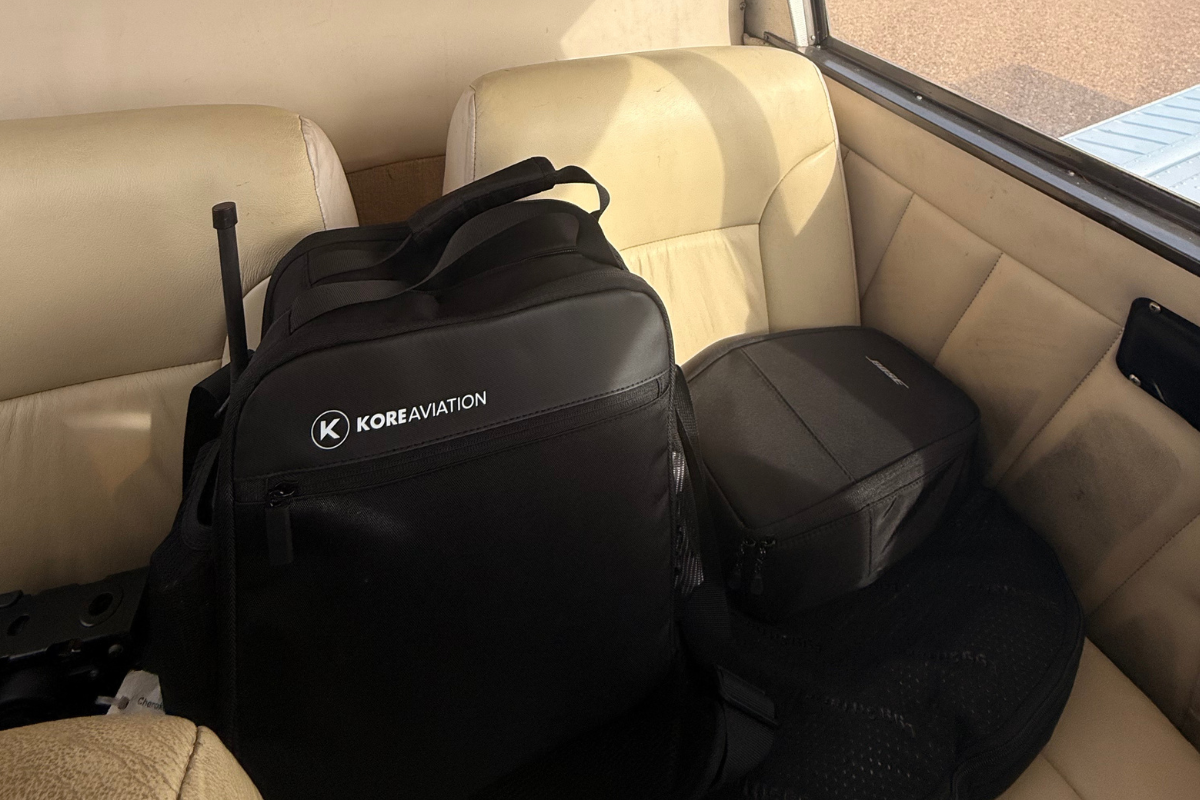
KORE Aviation - A pilot headset bag might not seem important, but it plays a big role in protecting your aviation headset over time. Most pilots focus on the headset itself, like noise reduction and comfort, and do not think much about how it is stored between flights.
After a while, small issues start to show up. Cables twist, ear seals lose their shape, and the headset just does not feel the same. That usually comes from being tossed around in a flight bag. Most pilots do not notice the damage immediately. It usually shows up months later when the cable starts cutting out or the ear seals stop feeling comfortable.
Do You Actually Need a Dedicated Headset Bag?
Short answer, yes. Especially if your aviation headset costs more than about $150. Tossing it loose into a flight bag may seem fine at first, but it can slowly wear down the cable, ear seals, and microphone boom over time.
A proper headset bag helps keep everything protected between flights. Some aviation headsets already include a carrying case, although the level of protection varies depending on the design. Still, some bags do a better job than others, so it is worth knowing what to look for.
What Makes a Good Pilot Headset Bag
1. Hard Shell vs Soft Pouch
Soft cases are easier to carry and take up less space. They work well for short trips between the hangar and cockpit.
Hard shell or semi rigid cases offer better protection. If your flight bag gets packed tightly, goes through travel, or gets stacked with other gear, the extra structure helps prevent damage.
2. Foam Padding and Ear Cup Protection
Ear seals are one of the most sensitive parts of an aviation headset. Gel seals, like the ones used on the KORE Aviation KA-1, are designed for comfort. That same softness makes them easier to deform if stored under pressure.
A good headset bag includes foam padding that supports the ear cups without flattening them. That helps maintain both comfort and noise reduction over time.
3. Cable Management
Cables are one of the most common failure points. A good pilot headset bag keeps cables separated and loosely stored. Tight bends near the plug or repeated folding in the same spot can weaken the wiring over time. This is one of the most overlooked details. Many headset issues come from cable stress, not electronics.
4. Size and Fit
Not all headsets are the same size. Aviation headsets are larger than consumer headphones and require more space. A bag that is too small puts pressure on the headband and ear cups. A proper fit keeps everything in its natural position.
5. Zipper Quality and Closure
Most pilots never think about zippers until one breaks halfway through a training day. A strong zipper keeps the bag closed and prevents your headset from moving around. Cheap zippers tend to fail when you least expect it.
6. Exterior Pockets
Small exterior pockets can be useful. They give you space for accessories like spare batteries, adapters, or small tools without mixing them with your headset.
Protecting Your Aviation Headset Beyond the Bag Case
Storage Conditions
Temperature matters more than most pilots expect. Extreme heat or cold can affect ear seals and plastic components. Keeping your headset at room temperature helps extend its lifespan.
Noise Protection and Safety
This is not just about gear. Cockpit noise often ranges between 85 and 100 dB. That level requires proper protection over time. If your headset is damaged or worn out, noise protection drops. That can affect both comfort and long term hearing.
What Makes a Good Pilot Flight Bag
A headset bag protects one important piece of gear, but a pilot flight bag has a bigger job. It needs to carry the items you use before, during, and after each flight without turning into a messy pile of cables, pens, checklists, and electronics. For student pilots, that matters because training days already move fast.
A good pilot flight bag should feel organized without being oversized. You want enough room for your headset, tablet or logbook, chargers, kneeboard, flashlight, fuel tester, sunglasses, and small accessories, but not so much space that everything gets buried. The best bags make it easy to grab what you need without digging around in the cockpit.
1. Dedicated Headset Space
Your headset should not be squeezed between books, chargers, and loose tools. A good pilot flight bag should have enough room for a full size aviation headset or a protected headset compartment. This helps prevent bent cables, flattened ear seals, and unnecessary wear between flights.
2. Tablet or Logbook Sleeve
Most pilots carry either a tablet, a paper logbook, or both. A padded sleeve keeps these items protected and easy to reach. For student pilots using an iPad or training materials, this kind of storage helps keep everything in one place.
3. Small Accessory Pockets
Little items disappear fast in a flight bag. Pens, adapters, charging cables, batteries, and ear covers should have their own space. Internal pockets make the bag much easier to use because you know where everything is before engine start.
4. Durable Materials and Zippers
A pilot bag gets carried through parking lots, classrooms, hangars, and aircraft. It needs strong stitching, structured sides, and reliable zippers. If the zipper fails or the bag loses shape, it becomes frustrating quickly.
5. Comfortable Carrying Options
A good pilot flight bag should be easy to carry between flights. A padded handle and removable shoulder strap make a big difference, especially on long training days or when walking between buildings and aircraft.

Check out KORE Aviation Pilot Flight Bag
What Student Pilots Should Know
Student pilots tend to use their headset more than they expect. Flights, ground school, and constant movement between locations all add wear.
A good habit early on is storing your headset properly after every flight. It seems small, but over time it makes a big difference. Choosing a headset that includes a case, like the KORE Aviation KA-1, simplifies that decision.
Quick Checklist: What to Look for in a Pilot Headset Bag
- Semi rigid or hard shell for travel
- Foam interior that protects ear cups
- Cable storage area
- Strong zipper
- Proper size for aviation headsets
- Optional exterior storage
Frequently Asked Questions
1. Does the KORE Aviation KA-1 come with a carrying case?
Yes. The KA-1 includes a carrying case as part of the standard package at $224.95, no need to purchase one separately.
2. Can I use a regular headphone bag for an aviation headset?
Consumer headphone bags are typically not sized or shaped for aviation headsets, which have larger ear cups and dual plug cables. A bag designed for aviation gear will protect your headset much better.
3. Does the David Clark H10-13.4 come with a headset bag?
It varies by retailer and bundle, but the H10-13.4 often does not include a case in the base package, meaning you may need to purchase one separately, adding to the already higher $400–$450 price point.
4. How should I store my aviation headset long-term?
Store your headset in its case at room temperature, away from direct sunlight and humidity. Avoid leaving it in a hot car or unheated hangar for extended periods, as temperature extremes can degrade gel seals and plastic components.
5. Will a headset bag protect against TSA inspection damage?
A hard shell case offers the best protection if your bag goes through checked luggage. For carry on travel, a semi-rigid case is typically sufficient, just be aware that TSA may open the case for inspection.
6. Is gel seal protection different from foam seal protection in a bag?
Gel seals are more sensitive to compression than foam seals, so they benefit more from a case with contoured foam that prevents the ear cups from being squeezed flat during storage or transit.
7. What's the most important feature in a pilot headset bag?
For most GA pilots, cable management is the most overlooked and most important feature. Kinked or bent cables near the plug are the most common point of failure in aviation headsets over time.
The Bottom Line
A pilot headset bag might not seem important at first. But over time, it plays a big role in protecting your aviation headset, maintaining comfort, and avoiding unnecessary repairs.
Choosing the right bag is not about spending more. It is about protecting something you rely on every flight.
Check out the KORE Aviation KA-1 if you want a headset that already includes a well designed carrying case and is built for long term training use.


