

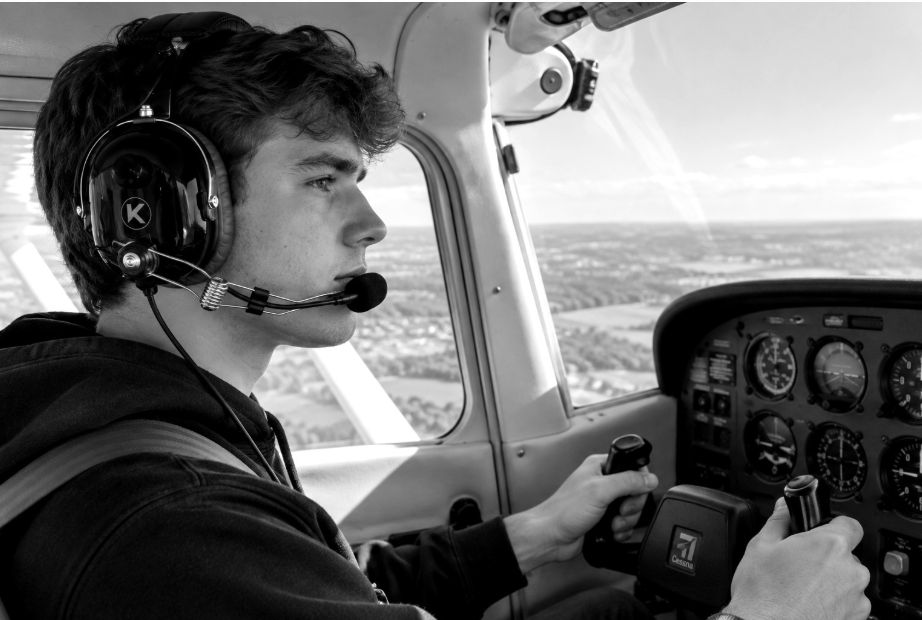
KORE Aviation - When you start shopping for cockpit gear, the sheer number of options can make your head spin. Prices range from under one hundred dollars to over one thousand dollars. Many aviation veterans tell newcomers they must spend a fortune on active noise reduction to protect their hearing. That advice often misses the mark in typical training and general aviation flying. Over thirty thousand pilots and more than fifty flight school partners rely on passive protection because it gets the job done reliably without emptying your bank account. If you want a dependable KORE aviation headset, you only need to choose the exact model that matches your flying profile, budget, and aircraft panel.
The entire product lineup consists of three primary models built for specific flying environments. This direct PNR pilot headset comparison breaks down the KA-1, the P1, and the H1 so you can spend your hard-earned money wisely. None of these units feature active electronics. Instead, they rely on proven mechanical design, sturdy construction, and comfortable ear seals to block out engine drone and radio static. Selecting your ideal KORE aviation headset straightforwardly starts with understanding how these three units differ in price, features, and intended aircraft applications.
Choosing the Right KORE Aviation Headset for Your Cockpit
Before examining individual models, you need to understand how passive noise reduction works in a typical cockpit environment. A Cessna 172 cruising at altitude produces cockpit noise levels between 85 and 95 decibels, while engine run-ups can push past 100 decibels. According to federal guidelines and occupational safety standards, unprotected exposure to those noise levels leads to gradual hearing loss over time. A quality KORE aviation headset provides 24 dB of passive attenuation, dropping those harsh engine frequencies down to a safe range.
Because every model shares this exact 24 dB passive noise reduction rating, your purchasing decision does not come down to noise cancellation performance numbers. Instead, you must evaluate mechanical factors. Do you fly fixed-wing aircraft or helicopters? Do you need stereo sound for cross-country music and ForeFlight audio prompts? Are you buying for a flight school fleet on a tight budget, or do you want a long-term investment backed by an extended warranty? Reviewing how each KORE aviation headset performs under different operational conditions helps clarify your choice.

A Closer Look at Every KORE Aviation Headset Model
To make an informed choice, let us examine each headset individually, looking at price points, features, warranty terms, and intended users. Whether you are tackling your first solo flight or logging hours toward your commercial license, understanding the nuances of the KA-1, P1, and H1 ensures you buy the right tool for the job. Investing in a KORE aviation headset that matches your specific training or ownership needs prevents wasted cash and ensures cockpit comfort.
KORE KA-1: The Long-Term Fixed-Wing Choice
Priced at $224.95, the KORE KA-1 is built for student pilots and aircraft owners who plan to log hundreds of hours and want a single headset that will last for years. This model comes with dual GA plugs, meaning it plugs straight into standard fixed-wing audio panels without adapters. One of its standout features is the switchable mono and stereo audio mode. If you fly cross-country flights and want to pipe music from your phone or listen to stereo audio alerts from your tablet navigation app like ForeFlight, the KA-1 handles stereo separation effortlessly.
Comfort is another major factor for long cross-country legs. The KA-1 comes equipped with ultra-plush silicone gel ear seals that conform to the shape of your head, creating a tight acoustic seal even if you wear aviation glasses. Furthermore, KORE backs the KA-1 with a generous 5-year warranty. If you want a comprehensive KORE aviation headset review perspective, pilots consistently praise the KA-1 for offering mid-tier comfort and durability at an entry-level price point.
KORE P1: The Budget-Friendly Fixed-Wing Workhorse
For pilots operating on strict budgets or flight schools purchasing headsets in volume for student fleets, the KORE P1 is an ideal match. The headset-only version retails for $124.95, while a bundle that includes a protective headset bag costs $139.95. Like the KA-1, the P1 uses dual GA plugs and provides 24 dB of passive noise reduction. However, it is strictly a mono headset, meaning it does not feature a stereo switch.
The P1 is built to take a beating in training environments. It features a simplified design, sturdy headband construction, and a reliable electret microphone with clear voice transmission. It carries a 1-year warranty. For student pilots who want to save cash during private pilot training or for flight schools looking for durable loaner units, the P1 delivers exceptional value without sacrificing hearing protection.

KORE H1: Built Specifically for Helicopter Pilots
If your flying takes place in rotorcraft rather than airplanes, standard fixed-wing gear will not work out of the box. Helicopters require a single military-style connector known as a U-174 plug. The KORE H1 helicopter headset is priced at $224.95 and comes standard with a U-174 single plug and an included headset bag. It is engineered specifically for helicopter and rotorcraft audio panels.
Trying to plug a standard dual-plug GA headset into a helicopter intercom jack is impossible without an aftermarket adapter box. The H1 solves this problem directly by integrating the correct single plug and coiled cord configuration preferred by rotorcraft pilots. Like its fixed-wing siblings, the H1 delivers 24 dB of passive noise reduction and robust mono audio tailored for clear radio calls in demanding helicopter environments.

Side-by-Side Comparison Table
This spec comparison table outlines the exact differences across the entire KORE lineup so you can review specifications at a glance.
| Model | Price | Aircraft Type | Plugs | Audio Mode | Ear Seals | Warranty |
|---|---|---|---|---|---|---|
| KORE KA-1 | $224.95 | Fixed-Wing GA | Dual GA (PJ-055 / PJ-068) | Switchable Mono / Stereo | Silicone Gel | 5 Years |
| KORE P1 | $124.95 ($139.95 with bag) | Fixed-Wing GA | Dual GA (PJ-055 / PJ-068) | Mono Only | Standard Foam / Comfort | 1 Year |
| KORE H1 | $224.95 | Helicopter / Rotorcraft | Single U-174 Plug | Mono Only | Standard Comfort Seals | 1 Year (or standard policy) |
The PNR Reality and Cockpit Noise Levels
A common misconception in aviation gear is that you must spend a thousand dollars on active electronics to protect your hearing. In reality, a well-designed passive noise reduction headset using quality ear seals achieves approximately 20 to 24 dB of attenuation. When you look at a PNR pilot headset comparison, you see that passive reduction blocks high-frequency turbine whines and mid-range engine sounds effectively.
Consider the acoustic environment of a typical single-engine piston trainer. Cruising sound levels sit around 90 dB. Subtracting 24 dB puts the sound reaching your eardrums well below hazardous thresholds. While active units add electronic counter-frequencies to lower low-frequency drone even further, they also introduce battery dependencies, higher failure points, and massive price tags. For piston aircraft training, cross-country flying, and general aviation ownership, a reliable passive KORE aviation headset provides all the hearing protection you need.
Making Your Final Decision: Which Model Wins for You?
Selecting your headset ultimately comes down to practical operational requirements. If you fly fixed-wing general aviation aircraft and want the best long-term buy with stereo audio support for music and tablet navigation apps, pick the KA-1. The 5-year warranty and gel seals justify the extra cost over years of flying.
If you fly fixed-wing aircraft on a tight student budget, need a reliable backup pair to keep in your flight bag, or manage a flight school fleet, pick the P1. It delivers robust audio and hearing protection at a fraction of the cost.
If your logbook is filled with rotorcraft hours, pick the H1. Never attempt to use a standard dual-plug fixed-wing headset in a helicopter without a specialized adapter cable because the plugs are physically incompatible with the U-174 panel jack. Matching your hardware to your cockpit ensures seamless communication from engine start to shutdown.
Frequently Asked Questions
1. Are KORE aviation headsets ANR or PNR?
All KORE headsets utilize passive noise reduction rated at 24 dB. They do not use battery-powered active noise reduction electronics, which keeps them lightweight, reliable, and maintenance-free.
2. Can I use the KORE P1 in a helicopter?
No. The P1 features dual GA plugs designed for fixed-wing aircraft. To use it in a rotorcraft, you would need an aftermarket adapter, though buying the dedicated H1 helicopter model is the correct solution.
3. Why does stereo audio matter on the KA-1?
The KA-1 features a switchable mono and stereo mode. Stereo audio allows you to hear distinct audio channels in your left and right ears, which is ideal if you listen to music or use aviation apps with stereo audio alerts during cross-country flights.
4. Do I need to buy a headset bag separately?
The KA-1 and H1 include a carrying case or headset bag with purchase. The P1 is available as a standalone headset for $124.95 or as a bundle with a headset bag for $139.95.
5. How often should I replace my headset ear seals?
For optimal acoustic sealing and comfort, inspect your ear seals annually and replace every 6 to 18 months depending on wear, sweat exposure, and climate conditions.
Bottom Line
Choosing the right KORE aviation headset comes down to the aircraft you fly, your budget, and the features you actually need. For fixed-wing pilots who want a headset for regular training and long-term use, the KORE KA-1 is the strongest all-around choice with 24 dB PNR, silicone gel ear seals, mono/stereo capability, and a 5-year warranty. The P1 makes more sense for students on a tighter budget, flight schools, passengers, or pilots looking for a dependable backup headset. For helicopter pilots, the H1 provides the dedicated U-174 connection needed for many rotorcraft.
All three models use passive noise reduction, so there are no batteries or ANR electronics to manage. Rather than paying for features you may not need, choose the headset that matches your cockpit and how you fly. For most fixed-wing student and private pilots, the KA-1 offers the best balance of comfort, features, durability, and price in the KORE lineup.


