

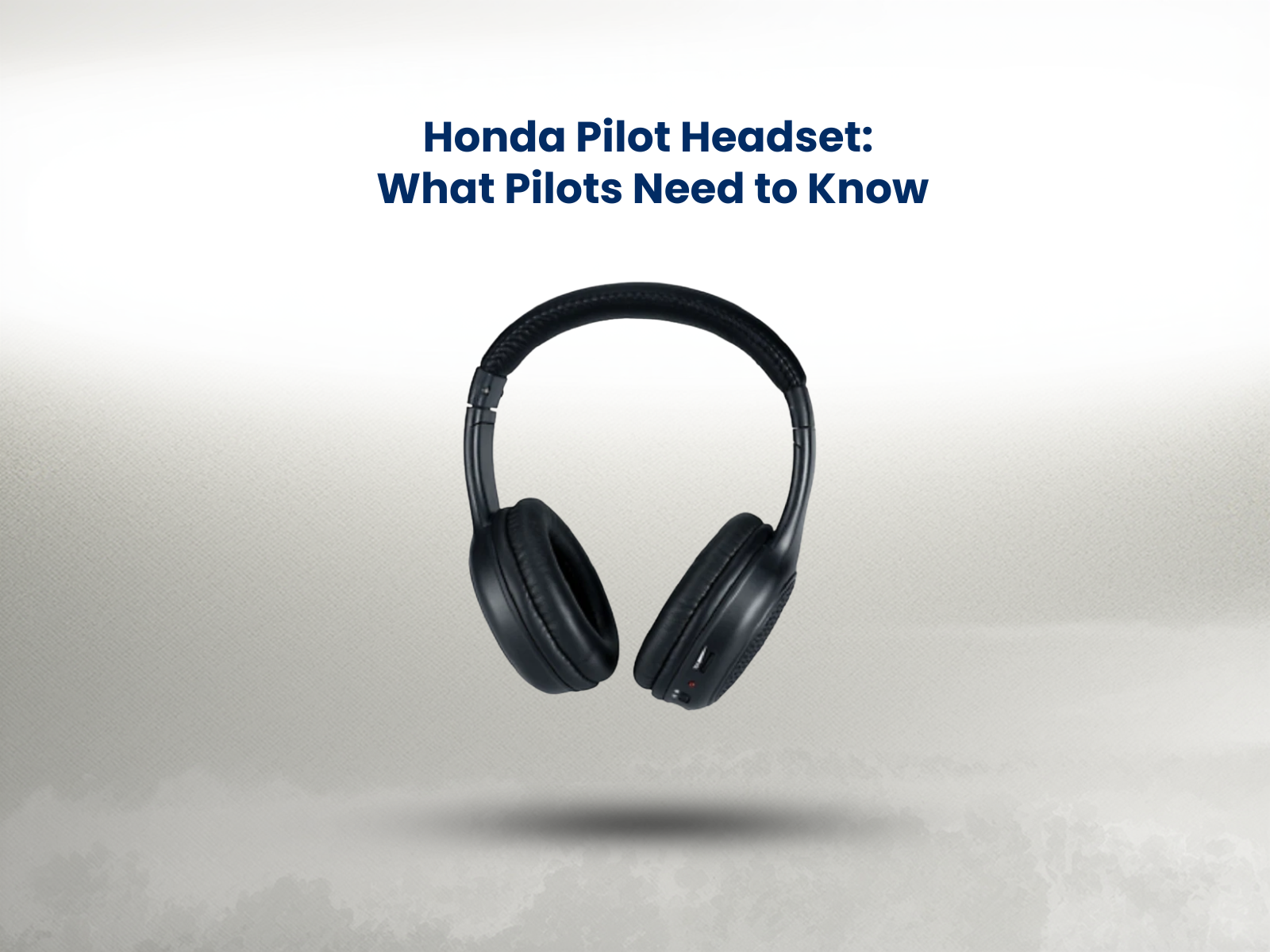
KORE Aviation - If you searched for “Honda Pilot headset,” you might be looking for one of two very different things.
You may mean headphones for the Honda Pilot SUV, such as rear entertainment headphones, Bluetooth audio accessories, or replacement headphones for passengers. In that case, you are looking for a car accessory.
But if you searched because you are learning to fly, training as a student pilot, or shopping for cockpit gear, then you need something completely different. A real aviation headset is not the same as a car headset, Bluetooth headset, gaming headset, or regular pair of headphones.
A Honda Pilot headset is made for passengers in a vehicle. An aviation headset is made for aircraft communication, cockpit noise, and clear pilot communication. That difference matters because the wrong headset will not work in the cockpit.
Why “Honda Pilot Headset” Can Be Confusing
The phrase “Honda Pilot headset” mixes two different meanings. One refers to the Honda Pilot vehicle. The other sounds like a headset for someone who pilots an aircraft. This article focuses on the aviation side.
In aviation, a headset is one of the most important pieces of gear a pilot uses. It connects to aircraft communication systems, helps reduce cockpit noise, and allows clear communication during every phase of flight.
That is why regular consumer headphones do not work for flying. They are not made for aircraft plugs, cockpit microphones, aircraft intercom systems, or the noise level inside a piston aircraft.
A headset for flying needs to do more than play audio. It needs to help you hear clearly, speak clearly, and stay focused in a loud cockpit.
Honda Pilot Headset vs Aviation Headset
The phrase “pilot headset” can be confusing because “Honda Pilot” is a vehicle name, while “pilot headset” can also mean a headset for flying.
Here is the simple difference.
| Search Term | What It Usually Means | What You Should Buy |
|---|---|---|
| Honda Pilot headset | Headphones for the Honda Pilot SUV entertainment system | Vehicle-compatible headphones or rear entertainment headphones |
| Pilot headset | Headset for flying an aircraft | Aviation headset with aircraft-compatible plugs |
| Student pilot headset | First headset for flight training | Comfortable aviation headset with good noise reduction and microphone clarity |
So if you are trying to replace headphones for your Honda Pilot SUV, you do not need an aviation headset. But if you are preparing for flight training, a car headset will not do the job.
Also read: Best Aviation Headset for Student Pilots for 2026: The Value Tier Explained
What Pilots Actually Mean by a “Pilot Headset”
When pilots talk about a headset, they usually mean an aviation headset built specifically for flying.
Aviation headsets connect to aircraft communication systems. In many general aviation aircraft, that means dual GA plugs. In helicopters, it often means a different plug type. These headsets also use microphones designed for cockpit communication, not regular phone calls.
The biggest difference is noise. A car cabin is relatively quiet compared with a training aircraft. A piston aircraft cockpit can be loud, and normal headphones are not built to handle that environment.
That is why pilots use aviation headsets. They help reduce cockpit noise, make radio calls easier to understand, and allow the pilot, instructor, passengers, and air traffic control to communicate clearly.
Why Regular Headphones Do Not Work for Flying
A good pair of consumer headphones may be comfortable in a car, but that does not make them safe or practical in an airplane.
Regular headphones are made for music, phone calls, meetings, or entertainment. They are not designed for aircraft radios, aviation plugs, cockpit microphones, or the constant noise inside a training aircraft.
An aviation headset has to do more than play audio. It needs to support intercom communication, radio transmission, microphone clarity, and long wear time in a small cockpit.
That is why a Honda Pilot headset and an aviation headset should not be treated as interchangeable. One belongs in a car. The other belongs in an aircraft.
If You Meant an Aviation Headset, Here’s What Changes
If you searched “Honda Pilot headset” but actually meant a headset for flying, the product category changes completely.
You are no longer looking for a car audio accessory. You are looking for a headset built for aircraft radios, cockpit noise, and clear voice communication.
Most student pilots and general aviation pilots look for three things first: clear audio, reliable microphone performance, and enough noise reduction for piston aircraft. Comfort also matters because lessons can last an hour or more, and a headset that feels fine at first can become distracting during longer flights.
Some aviation headsets use passive noise reduction, while premium models may include active noise reduction. But if you are just starting flight training, you do not always need the most expensive headset right away.
For many new pilots, the smarter first step is a reliable aviation headset that is comfortable, durable, and practical for training.
Also read: Is a Bose Aviation Headset Worth It, Or Is There a Smarter Buy?
What to Look for in an Aviation Headset
A good aviation headset should help you hear clearly without turning the volume too high. For many piston training aircraft, a passive noise reduction rating around 23 to 24 dB is a practical target.
Comfort matters just as much. A headset may feel fine for a few minutes on the ground, but after a longer lesson, clamping pressure, ear seal material, and headband comfort become much more noticeable.
Microphone quality is also important. A good aviation microphone helps your voice come through clearly even with engine noise in the background. This matters during traffic pattern work, cross-country training, and flights into busier airspace.
Durability matters because student pilot gear gets used often. Your headset will go in and out of a flight bag, sit in warm cockpits, move between aircraft, and get used during nearly every lesson.
Price matters too. Most students are trying to balance gear costs with the cost of flight training. The cheapest headset may work at first, but it may not be comfortable enough for regular flying. Premium headsets can be excellent, but many new pilots do not need to spend that much right away. The best first headset usually sits somewhere in the middle.
Aviation Headset Options for Student Pilots
Once you know you need an aviation headset, the next question is which one makes sense for your stage of training.
Here is a simple comparison of common aviation headset options for student pilots and general aviation flying.
| Headset | Type | Noise Reduction | Key Features | Approx. Price | Best For |
|---|---|---|---|---|---|
| KORE Aviation KA-1 | PNR | 24 dB | Gel ear seals, AUX input, stereo and mono support, 5-year warranty | Around $220 | Best overall value for regular student pilots |
| David Clark H10-13.4 | PNR | 23 dB | Classic general aviation headset design, long-standing brand reputation | Around $400 to $450 | Pilots who want a legacy GA benchmark |
| KORE Aviation P1 | PNR | 24 dB | Lightweight and simple setup | Around $120 | Budget-conscious beginners |
| Rugged Air RA200 | PNR | Around 23 dB | Basic entry-level design | Around $100 | Occasional flying or lowest upfront cost |
| Lightspeed Zulu 3 | ANR | Active noise reduction | Premium comfort and ANR performance | Around $900 | Frequent pilots flying longer trips |
| Bose A30 | ANR | Active noise reduction | Premium ANR design | Around $1,250 | Pilots who want top-tier ANR comfort |
Each category has a place. Budget headsets can work for occasional use. Legacy PNR headsets have a strong reputation. Premium headsets are excellent for pilots who fly long hours.
For many student pilots, the best value is usually a reliable PNR headset with good comfort, clear communication, and a price that still leaves room in the budget for flight hours.
Read More: Student Pilot Headset Upgrade Guide: When to Move Up and What to Look For
Why the KORE Aviation KA-1 Is a Strong Value Pick
The KORE Aviation KA-1 is a practical choice for student pilots who want more comfort and features than a basic budget headset without moving into premium ANR pricing.
It includes 24 dB passive noise reduction, gel ear seals, a noise-canceling microphone, AUX input, stereo and mono support, and a 5-year warranty. Those are the features many new pilots actually use during training, especially once lessons become longer or more frequent.
For pilots who plan to train regularly, the KA-1 offers a good balance of comfort, communication clarity, durability, and price.
What If You Want the Lowest Upfront Cost?
If your main goal is to spend as little as possible, a basic PNR headset or the KORE Aviation P1 may be enough to start.
The P1 is a simpler option for students who want their own aviation headset without a larger upfront investment. It can work well for discovery flights, early training, or students who are still deciding how often they will fly.
For regular training, the KA-1 is the better long-term choice because it offers more comfort features and stronger overall value.
Do You Need ANR as a Student Pilot?
Most student pilots do not need ANR right away. ANR headsets can be excellent, especially for long flights, frequent flying, or pilots who spend many hours in the cockpit. But they also cost significantly more.
For early private pilot training, a quality PNR headset is usually the smarter starting point. It gives useful noise reduction, does not require batteries, and keeps more of your budget available for lessons.
You can always upgrade later if your flying becomes more frequent or your mission changes.
Frequently Asked Questions
1. Is a Honda Pilot headset the same as an aviation headset?
No. A Honda Pilot headset usually refers to headphones or audio accessories for the Honda Pilot SUV. An aviation headset is built for aircraft communication, cockpit noise, and pilot use.
2. Can I use Honda Pilot headphones in an airplane?
No. Honda Pilot vehicle headphones are not designed for aircraft radios, aviation plugs, cockpit microphones, or hearing protection in a piston aircraft. Pilots need an aviation headset.
3. What should I buy if I need headphones for a Honda Pilot SUV?
Look for headphones or replacement rear entertainment headphones that match your Honda Pilot model year and trim. Compatibility can vary, so check whether your vehicle uses Bluetooth, infrared, or a specific Honda entertainment system setup.
4. What headset do pilots actually use?
Pilots use aviation headsets, usually PNR or ANR models. Student pilots often start with PNR headsets because they are reliable, practical, and more affordable than premium ANR options.
5. Is 24 dB passive noise reduction enough for general aviation?
For many piston training aircraft, 24 dB passive noise reduction is a strong PNR rating. Actual protection depends on the aircraft, headset fit, ear seal quality, glasses, and how well the headset sits around your ears.
6. Do student pilots need ANR?
Usually not at the beginning. ANR is helpful for longer flights and frequent flying, but many student pilots are better served by a quality PNR headset during early training.
7. What is the difference between KORE KA-1 and KORE P1?
The KORE P1 is the more budget-friendly starting point. The KORE KA-1 is the stronger long-term option because it adds features such as gel ear seals, AUX input, stereo and mono support, and a 5-year warranty.
8. What is the best headset for a student pilot?
The best headset is the one that balances comfort, communication clarity, noise reduction, durability, and price. For regular student pilots, the KORE Aviation KA-1 is a strong overall value pick. For students focused mainly on the lowest upfront cost, the KORE Aviation P1 is a practical starting point.
The Bottom Line
A Honda Pilot headset and an aviation headset are two very different things. If you are looking for headphones for a Honda Pilot SUV, you need a vehicle audio accessory that matches your model year and entertainment system. If you are learning to fly or shopping for cockpit gear, you need a real aviation headset made for aircraft communication and cockpit noise.
For student pilots, the best first headset is usually not the cheapest option or the most expensive premium model. It is the headset that gives you clear communication, useful noise reduction, good comfort, and long-term value without taking too much money away from flight training.
For the lowest upfront cost, the KORE Aviation P1 is a practical starting point. For students who plan to train regularly, the KORE Aviation KA-1 is the stronger long-term value because it fits what many new pilots actually need: reliable PNR performance, comfort-focused features, warranty coverage, and a price that makes sense during training.


