

Why Every Pilot Eventually Faces the Need for a Second Aviation Headset
KORE Aviation - When you earn your private pilot license or purchase your first aircraft, gear shopping usually revolves around a single item. You research passive noise reduction, gel ear seals, and audio clarity to find the ideal piece of equipment for your own head. Yet, aviation is rarely a solo endeavor for long. Whether you want to share the left seat with a flying spouse, take your kids on a weekend breakfast flight, or host a safety pilot during instrument training, owning a second aviation headset quickly transforms from a luxury into an absolute necessity.
Most aviation gear guides treat headset ownership as a one-time transaction. They ignore the practical realities of flight operations once you start inviting people into your cockpit. Relying on flight school rentals or forcing a passenger to sit in silence is not a sustainable long-term strategy. Building out a proper dual-headset capability changes how you fly, removing friction from trip planning and ensuring safety compliance for every single occupant on board.
The Four Scenarios That Force the Question
Four distinct operational situations inevitably force pilots to invest in a second aviation headset. Recognizing these scenarios early helps you budget properly and select equipment that matches your specific mission profile.
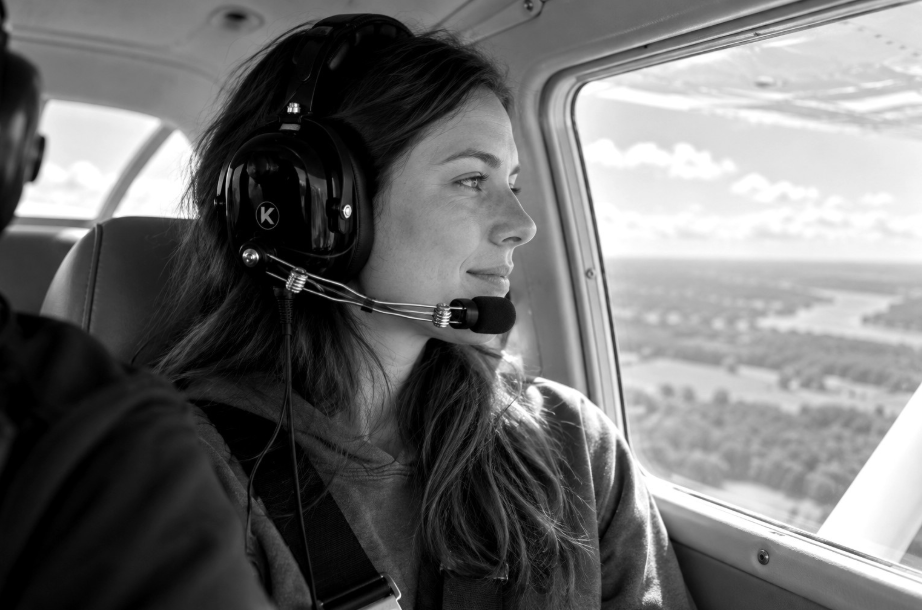
First is taking family and friends flying. Non-pilots are often apprehensive about small airplanes, and engine noise amplifies that anxiety instantly. Handing a guest a clean, comfortable, properly fitted headset turns a stressful experience into an enjoyable flight.
Second is sharing an aircraft with a spouse or partner who also holds a certificate. If both of you fly PIC, trading a single headset back and forth or dealing with mismatched personal settings grows frustrating very quickly. Having two dedicated units eliminates cockpit friction.
Third is needing an emergency backup when your primary unit fails away from home. Electronics fail at the worst possible times. If your primary ANR module dies at a remote field three hours from your home base, having a reliable mechanical spare pilot headset in your luggage saves your trip. Furthermore, buying a second aviation headset guarantees you can hand over a functioning unit if primary gear malfunctions.
Fourth is carrying a loaner for a right-seat observer, flight instructor, or safety pilot. When flying under hood or operating complex airspace, you need your safety pilot fully integrated into the intercom system without awkward equipment sharing.
The Safety Case and Cabin Decibel Realities
Safety is the primary justification for a dedicated passenger aviation headset. In a typical training aircraft like a Cessna 172, cabin noise levels hover between 85 and 95 dB during cruise flight, and spike past 100 dB during high-power run-ups. The Occupational Safety and Health Administration caps safe occupational noise exposure at 90 dB for eight hours, while the National Institute for Occupational Safety and Health recommends an 85 dB ceiling.
At 100 dB, safe unprotected exposure time drops to roughly 15 minutes before permanent hearing damage begins. Federal Aviation Administration advisory circulars note that pilots flying more than three hours per week face severe risks of gradual hearing loss without proper attenuation.
When a passenger flies without adequate hearing protection, the consequences extend beyond long-term auditory damage. They cannot hear radio calls, cannot hear safety briefings, and cannot communicate with you over the intercom. A non-verbal passenger creates a genuine safety hazard during abnormal or emergency procedures when quick crew coordination is mandatory.
Providing an aviation headset for passengers ensures that everyone in the cabin stays connected to the intercom. Clear communication keeps passengers calm, allows immediate verbal warnings if traffic appears, and preserves hearing health for everyone on board.
Why Your Second Aviation Headset Does Not Need to Match Your First
A common misconception is that when choosing your second aviation headset, you must assume that it must be an identical twin to your primary gear. Pilots often hesitate to buy secondary equipment because they assume they must spend another large sum on top-tier electronics. In reality, choosing a second aviation headset that balances cost and performance serves flight operations much better.
Your primary unit is worn for hundreds of hours per year. Investing in a robust primary headset like the KORE Aviation KA-1 General Aviation Headset at $224.95 provides features like switchable mono and stereo capability, premium silicone gel ear seals, a 24 dB Passive Noise Reduction rating, and a 5-year warranty. It handles heavy daily use with ease.
For your right seat or passenger positions, a simpler, highly durable unit delivers exceptional value. The KORE Aviation P1 General Aviation Headset at $124.95 offers the exact same 24 dB Passive Noise Reduction rating, rugged acoustic foam earcups, and reliable voice transmission at nearly half the cost. You can also get the P1 with Headset Bag bundle for $139.95 if you need a dedicated storage case included.
This tiered strategy gives the pilot maximum comfort and advanced features for long cross-country legs, while providing guests with robust, certified hearing protection that withstands casual use without draining your aviation budget.
Scenario to Recommendation Guide
| Operational Scenario | Primary Need | Recommended KORE Product | Key Advantage |
|---|---|---|---|
| Solo pilot needing an emergency backup | Reliable spare pilot headset stored in luggage | P1 General Aviation Headset ($124.95) | Lightweight, simple mono operation, robust 24 dB PNR |
| Regular passenger or family flying | Comfortable passenger aviation headset for right seat | KA-1 General Aviation Headset ($224.95) | Gel ear seals, 5-year warranty, AUX input for music |
| Sharing aircraft with a flying partner | Two high-end units for dual PIC operations | Dual KA-1 setup ($224.95 each) | Identical premium comfort and stereo support for both seats |
| Right-seat safety pilot or instructor | Durable loaner aviation headset for passengers | P1 with Headset Bag Bundle ($139.95) | Includes protective storage bag and solid mechanical build |
| Helicopter and rotorcraft operations | Single plug rotorcraft communication | H1 Helicopter Pilot Headset ($224.95) | U-174 single plug configuration designed for rotor panels |
Kids, Petite Passengers, and Intercom Jack Limits
Equipping children and petite adults presents unique challenges that standard aviation gear often ignores. When purchasing a second aviation headset for family members or younger guests, traditional adult designs exert a clamping force of roughly 6 to 7 N. On a child or small-framed passenger, excessive clamping force causes severe head and jaw fatigue within thirty minutes.
When selecting a headset for family flying, headband adjustment range and physical weight are critical metrics. A budget headset weighing between 14 and 18 oz with adjustable sliders works best for younger occupants. Hearing protection for children is not optional. Developing ears are far more sensitive to cockpit noise than adult ears, and a loose-fitting headset allows low-frequency engine rumble to bypass the seal entirely.
Before you load up the aircraft, check your intercom seat limits. Many four-seat trainers like older Piper Cherokees or Cessna 172s were originally delivered with two-place intercom systems or limited auxiliary jacks. Verify how many functional headset jacks your aircraft actually features before promising your kids a front-row seat to the intercom conversation. If your panel requires expansion, consult an avionics shop to ensure every seat has a dedicated connection.

Storage, Transport, and Gear Protection
Carrying two pieces of aviation equipment changes how you pack your flight bag. Transporting a second aviation headset safely requires dedicated protection to prevent tangled cables, scratched earcups, and broken boom mics.
A proper transport strategy requires dedicated protection. For individual storage, the KORE Pilot Headset Bag at $26.99 offers padded protection and heavy-duty zippers that keep your secondary unit safe between flights. If you carry multiple headsets, charts, kneeboards, and emergency gear together, the larger KORE Pilot Flight Bag at $89.95 provides organized compartments designed specifically for working pilots.
Investing in quality storage extends the lifespan of your equipment. With over 30,000 pilots and 50 flight school partners trusting KORE hardware, protecting your investment ensures reliable communication for thousands of flight hours to come.
Frequently Asked Questions
1. Do I really need a second aviation headset if I only fly solo most of the time?
Yes. Even if you fly solo 90 percent of the time, having a backup unit stored in your aircraft luggage protects you against unexpected equipment failure. If your primary microphone or audio driver fails while you are away from home base, a backup unit allows you to complete your flight safely without renting or borrowing gear.
2. Can passengers use consumer noise-cancelling headphones instead of a certified aviation headset?
No. Consumer headphones lack the required Passive Noise Reduction ratings, appropriate microphone impedance for aircraft radios, and dual GA plug configurations. Furthermore, consumer electronics cannot withstand the mechanical vibration and clamping demands of a cockpit environment, and they fail to provide adequate high-decibel hearing protection.
3. What is the difference between the KORE KA-1 and the KORE P1 when choosing your second aviation headset model?
The KORE KA-1 retails at $224.95, features premium silicone gel ear seals, switchable mono and stereo support, a 3.5mm AUX input, and a 5-year warranty. The KORE P1 retails at $124.95, features rugged acoustic foam earcups, mono operation, and a 1-year warranty, sharing the exact same 24 dB Passive Noise Reduction rating for effective hearing protection.
4. Are aircraft intercom jacks universal for all passenger headsets?
Most fixed-wing general aviation aircraft use standard dual GA plugs consisting of a PJ-055 microphone plug and a PJ-068 headphone plug. However, helicopter panels use a single U-174 plug, and some modern glass-cockpit aircraft or advanced avionics incorporate LEMO panel-power plugs. Always verify your aircraft plug type before purchasing secondary gear.
5. How do I clean and maintain multiple headsets used by different passengers?
Passengers often perspire during summer flights, making hygiene maintenance important. Using washable cloth ear covers, such as KORE cloth ear covers, prevents sweat accumulation on ear seals. Wipe down the headband and boom microphone with mild disinfectant wipes after passenger flights to keep your gear fresh.
Bottom Line
A second aviation headset becomes useful long before most pilots expect it. It can serve as a passenger headset for family and friends, a loaner for a CFI or safety pilot, or a reliable backup if your primary headset develops a problem away from home.
It also does not need to match your primary headset. If you want more comfort for frequent passenger use, the KORE Aviation KA-1 combines 24 dB PNR with silicone gel ear seals and a 5-year warranty. For occasional passengers, instructors, or backup duty, the more affordable KORE Aviation P1 provides the same 24 dB PNR in a simpler package.
Choose your second headset based on who will use it, how often it will fly, and your aircraft's connection type. A dependable spare may spend plenty of time in your flight bag, but when you need it, you will be glad it is there.


