

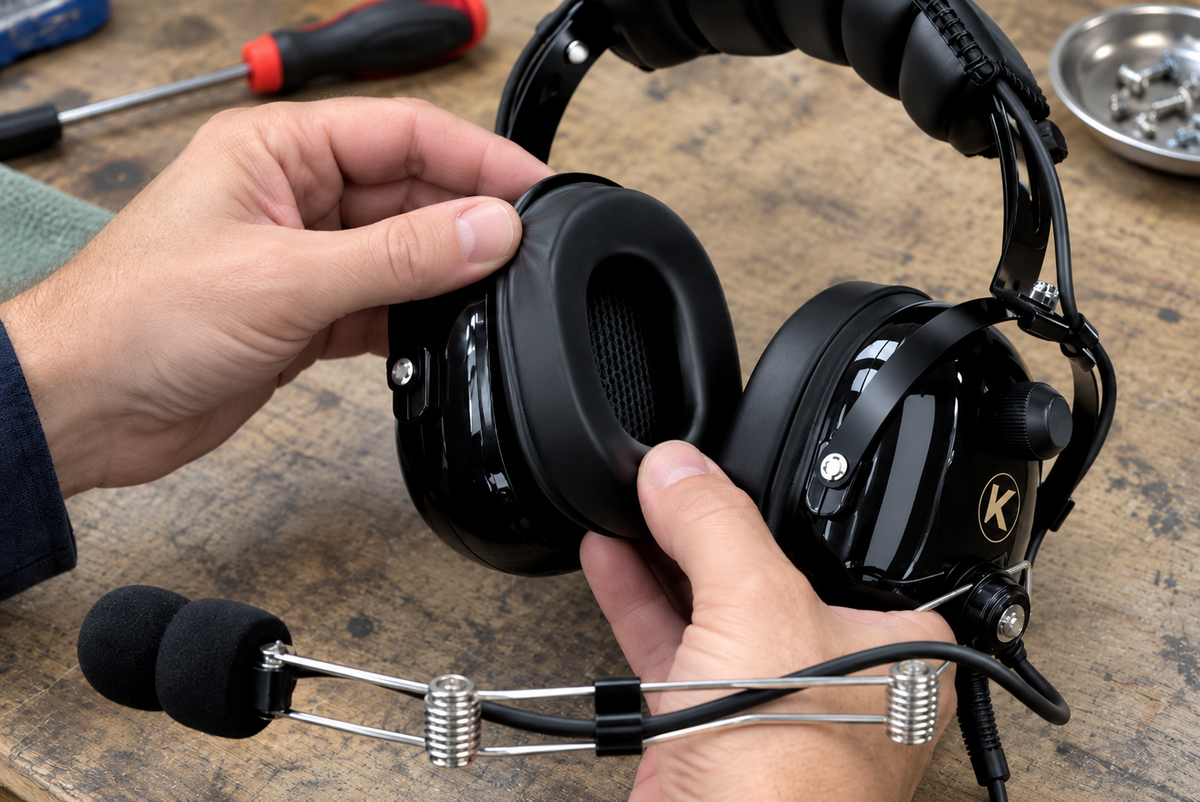
Understanding Gel Ear Seals vs Cloth Ear Covers in the Cockpit
When you look at headset accessories, choosing between gel ear seals vs cloth ear covers often causes confusion for new pilots. These two popular products solve entirely different problems in the cockpit. A gel ear seal is the primary acoustic cushion that replaces the stock foam ring on your earcup, creating the critical barrier against engine roar, wind noise, and propeller whine. A cloth ear cover is a soft fabric sleeve that slips directly over that cushion to manage sweat, skin oil, and comfort during long training flights.
Over 30,000 pilots and 50 plus flight school partners rely on KORE Aviation for reliable gear. Understanding gel ear seals vs cloth ear covers ensures your hearing stays protected and your cockpit hours remain comfortable. A Cessna 172 cabin generates between 85 and 95 dB of continuous ambient noise at cruise, and over 100 dB during engine run-up. Without proper acoustic sealing, that noise level causes fatigue and long-term hearing damage. Knowing whether you need new aviation headset ear pads or simple washable sleeves dictates your physical comfort on every flight.
What Are Gel Ear Seals and How Do They Work?
Gel ear seals consist of a flexible silicone or polyurethane outer skin filled with a viscous fluid gel. This material flows naturally around the contours of your head, jawline, and temple. Traditional foam ear cushions compress and hold rigid memory shapes, often creating pressure points behind the ear or allowing tiny gaps where sound waves leak in. Gel seals conform evenly, distributing the 6 to 7 N of clamping force exerted by standard aviation headsets across a wider surface area.
When you upgrade to KORE Aviation Silicone Gel Ear Seal (1 Pair) priced at $16.99, you immediately notice better passive noise reduction. The fluid core creates an airtight seal around glasses temples without breaking the acoustic barrier. Similarly, KORE Textured Gel Ear Seal (1 Pair) available at the same $16.99 price point offers a tactile surface that prevents sticking during humid summer operations. Premium headsets like the KORE KA-1 General Aviation Headset include high performance gel seals out of the box, but older headsets or entry level gear require replacement ear seals aviation enthusiasts frequently search for when factory foam begins to crack and harden.
What Are Cloth Ear Covers and What Do They Solve?
Cloth ear covers attack a completely different set of cockpit challenges, specifically heat, perspiration, and shared hygiene. During hot summer cross-country flights, synthetic or silicone ear seals trap body heat against the side of your head. This leads to heavy perspiration that leaves ears damp and uncomfortable after a two hour flight.
A cloth ear cover is a washable fabric sleeve made from 100 percent double knit cotton. It slips over your existing earcup cushion to absorb sweat and skin oils before they degrade the silicone material. You can purchase KORE Cloth Ear Cover (1 Pair) for $8.99. For flight schools or pilots flying multiple times a week, the KORE Cloth Ear Cover (3 Pairs) package is available for $19.99.
There is a minor trade-off when using a cloth ear covers headset accessory. Because the fabric layer wraps around the outer edge of the cushion, it slightly interrupts the absolute airtight seal required for maximum passive noise reduction. The fabric adds a tiny fraction of a decibel in sound leakage, but the comfort and moisture control in a sweltering cockpit easily outweigh the slight attenuation drop for most working pilots.
Gel Ear Seals vs Cloth Ear Covers: Maintenance, Lifespan, and How to Choose
Deciding between gel ear seals vs cloth ear covers depends on your specific flying environment, personal physiology, and maintenance habits. Evaluating gel ear seals vs cloth ear covers helps you maximize accessory lifespan and cockpit comfort.
Choose silicone gel ear seals if you experience temple pain from eyeglasses, if your current cushions are flat, cracked, or flaking, or if you fly long cross-country legs where maximum passive noise reduction is mandatory. Gel seals degrade naturally over time due to ultraviolet exposure, ozone, and facial oils. Plan on replacing your gel cushions every 6 to 18 months depending on your flight frequency. Daily flight instructors should swap them every 6 months, while weekend recreational pilots can push toward 18 months.
Choose cloth ear covers if you fly in hot, humid climates where sweat accumulation causes skin irritation, or if you manage a flight school where multiple students share club headsets. Sweat and skin oils are the primary killers of silicone and protein leather ear cushions. An $8.99 cloth cover absorbs that destructive moisture, effectively doubling or tripling the working lifespan of your $16.99 gel seals. Wash your cloth covers weekly in warm water and replace them when the cotton fibers thin out or lose their elastic stretch.
How to Swap Your Aviation Headset Ear Pads and Covers
Proper maintenance requires knowing how to remove old components and install new ones without tearing the mounting lips on your earcups.
To replace gel ear seals:
- Grip the old ear cushion firmly near its plastic mounting ring or backing plate.
- Gently peel the lip of the cushion away from the rim of the earcup, working your fingers around the circumference until the seal pops free.
- Inspect the plastic rim on the earcup for dirt or debris and wipe it clean with a damp cloth.
- Align the mounting lip of the new silicone or textured gel seal with the groove on the earcup rim.
- Press firmly around the entire perimeter until you feel and hear the lip snap securely into place, ensuring no gaps remain.
To install cloth ear covers:
- Ensure your current ear seals are clean and securely attached to the headset.
- Stretch the elastic opening of the cotton cover around the outer edge of the earcup cushion.
- Work the fabric evenly around the front and back of the cushion, similar to fitting a tiny bed sheet over a mattress.
- Smooth out any wrinkles across the face of the cushion to ensure flat contact against your skin and glasses temples.
Product Comparison and Decision Matrix
To make your purchasing decision simple, use this reference table matching your specific cockpit goal to the correct KORE product.
| Your Primary Cockpit Goal | Recommended Product | Price | Key Benefit |
|---|---|---|---|
| Eliminate pressure pain from glasses and maximize PNR | KORE Silicone Gel Ear Seal (1 Pair) | $16.99 | Flows around temple arms, creates airtight acoustic seal |
| Prevent sticking in humid weather with a tactile grip | KORE Textured Gel Ear Seal (1 Pair) | $16.99 | Textured surface reduces skin friction during long flights |
| Manage sweat and extend gel seal life on solo flights | KORE Cloth Ear Cover (1 Pair) | $8.99 | Washable 100 percent cotton absorbs sweat and skin oils |
| Outfit flight school loaner headsets for shared student hygiene | KORE Cloth Ear Cover (3 Pairs) | $19.99 | Multi-pack value for easy weekly rotation and sanitation |
| Complete headset upgrade with factory gel seals included | KORE KA-1 General Aviation Headset | $224.95 | 24 dB PNR passive noise reduction with plush gel comfort |

Frequently Asked Questions
1. Do cloth ear covers ruin noise reduction?
Cloth covers cause a very minor reduction in passive noise attenuation because the fabric layer slightly interrupts the tight seal between your skin and the silicone cushion. However, for most general aviation flying in aircraft like a Cessna or Piper, the difference is negligible compared to the massive comfort gain in hot weather.
2. Can I wear cloth covers over old cracked gel seals?
You can, but it is not recommended. Cloth covers absorb sweat and protect new seals, but they cannot restore acoustic integrity or cushion thickness once a gel seal has ruptured or hardened. Replace damaged seals first, then use cloth covers to protect your new investment.
3. How often should aviation ear seals be replaced?
Plan to replace your gel ear seals every 6 to 18 months depending on flight frequency and storage conditions. Full time flight instructors or pilots flying in extreme heat should replace them every 6 months, while casual weekend pilots can expect 12 to 18 months of useful life.
4. Why do flight schools prefer cloth ear covers?
Flight schools manage dozens of student pilots sharing the same club headsets. Cloth ear covers provide a hygienic, washable barrier between different users. Buying a three pack allows schools to rotate and launder covers weekly, keeping student gear fresh and sanitary.
5. Do I need gel seals if I wear glasses in the cockpit?
Yes. Gel seals conform fluidly around glasses temple arms, preventing the painful pressure points caused by stiff foam cushions and eliminating the acoustic gaps that let engine noise leak into your ears.
Bottom Line
Choosing between gel ear seals vs cloth ear covers comes down to what you want to improve in the cockpit. Gel ear seals replace the headset cushion itself and are the better choice when you need a secure acoustic seal, improved comfort around glasses, or a replacement for worn cushions. Cloth ear covers fit over your existing seals and are mainly designed to manage sweat, improve skin comfort, and keep shared headsets cleaner.
For many pilots, the best setup is actually both. Start with properly fitted KORE Aviation gel ear seals for cushioning and passive noise isolation, then add washable cloth ear covers when heat, humidity, or frequent headset sharing becomes an issue. Keeping both components clean and replacing worn seals when needed can make long training flights much more comfortable without replacing the entire headset.


