

KORE Aviation - When you shut down the engine after a long cross-country flight, do your ears ring? If you answered yes, you are experiencing the immediate aftermath of unsafe cockpit noise levels. Too many student and private pilots treat that ringing as a normal part of flying. It is not normal. It is an early warning sign of permanent hearing trauma. Protecting your ears with proper pilot hearing protection is just as critical as checking your fuel levels and oil pressure during your preflight walkaround.
Many people assume modern airplanes are quiet because they feature comfortable cabins and sleek avionics panels. The reality is quite different. Engine roar, propeller tip speeds breaking the sound barrier, rushing airflow over the canopy, and avionics cooling fans combine to create a relentless wall of sound inside the cabin. Understanding airplane noise levels dB helps you realize just how loud your office really is every time you take to the skies.
Understanding Cockpit Noise Levels Across Aircraft Types
Every aircraft has a unique acoustic signature. Some planes rumble at low frequencies that vibrate your entire skull, while others produce a high-pitched whine that directly fatigues your inner ear. Measuring cockpit noise levels across different aircraft categories reveals wide variations in decibel output.
| Aircraft Type | Typical Noise Level (dB) |
|---|---|
| Cessna 172 | 85 to 95 dB |
| Piper Cherokee | 90 to 100 dB |
| Helicopters | 95 to 105 dB |
| Turboprops | 80 to 90 dB |
| Jets | 75 to 85 dB |
Helicopters and legacy single-engine trainers push cockpit decibels well past safe boundaries. Without a solid barrier between your eardrums and the airframe, every hour in the air chips away at your auditory health. Helicopters are notoriously loud because of main rotor slap and transmission whine, often forcing pilots into danger zones without immediate realization.

OSHA and NIOSH Standards Versus Aviation Reality
Occupational Safety and Health Administration regulations and National Institute for Occupational Safety and Health guidelines provide strict limits for daily noise exposure. These standards are designed to prevent occupational hearing loss in industrial workplaces like construction sites and factories. In aviation, those same physiological rules apply, but the environment makes compliance much harder without dedicated gear.
- 85 dB: Safe for up to 8 hours of continuous exposure before damage occurs.
- 90 dB: Safe for up to 2 hours of exposure before hearing begins to degrade.
- 100 dB: Safe for only 15 minutes before permanent damage sets in.
When you fly a Piper Cherokee at 95 dB for a standard three-hour cross-country trip, you blow past safe exposure limits in less than sixty minutes. The surplus noise leads directly to pilot hearing damage if you rely on subpar equipment or fly completely unprotected. Over months and years of flight training, those unprotected hours compound into severe hearing loss.
The Reality of Aviation Hearing Loss and Cumulative Damage
Hearing loss does not happen all at once. It accumulates over hundreds of flight hours. Studies show that professional and general aviation pilots experience high-frequency hearing loss at rates significantly higher than the general population. This condition is formally known as noise-induced hearing loss.
Signs of damage include difficulty understanding air traffic control transmissions when background cabin noise increases, asking people to repeat themselves in quiet restaurants, and a persistent ringing in the ears known as tinnitus. When high cockpit noise levels erode your hearing, your ability to pick out critical radio calls during high workload phases of flight drops sharply. Clear communication is safety in the cockpit, and protecting your hearing safeguards that communication link.

How Aviation Headsets Protect Your Hearing Against High Cockpit Noise Levels
To combat dangerous cockpit decibels, pilots rely on aviation headsets. Headsets generally fall into two main categories: Passive Noise Reduction and Active Noise Reduction.
Passive Noise Reduction uses dense acoustic foam, rigid earcups, and optimized clamping force to block sound waves physically before they ever reach your outer ear. A well-designed PNR headset provides around 24 dB of noise reduction across critical frequencies, creating a substantial acoustic buffer.
Active Noise Reduction adds electronics to the equation. Microphones inside the earcup pick up ambient noise and generate an inverse sound wave to cancel it out, particularly at lower frequencies. While ANR technology works well, it often comes with a steep price tag, sometimes exceeding one thousand dollars. For many pilots, a high-quality PNR headset offers exceptional protection without emptying their wallet.
Why Managing Cockpit Noise Levels Matters for Your Career
You do not need to spend a fortune on complex electronics to get reliable hearing protection. Many aviation brands charge a massive markup for brand recognition and extra gadgetry. Smart pilots look for proven durability and certified performance.
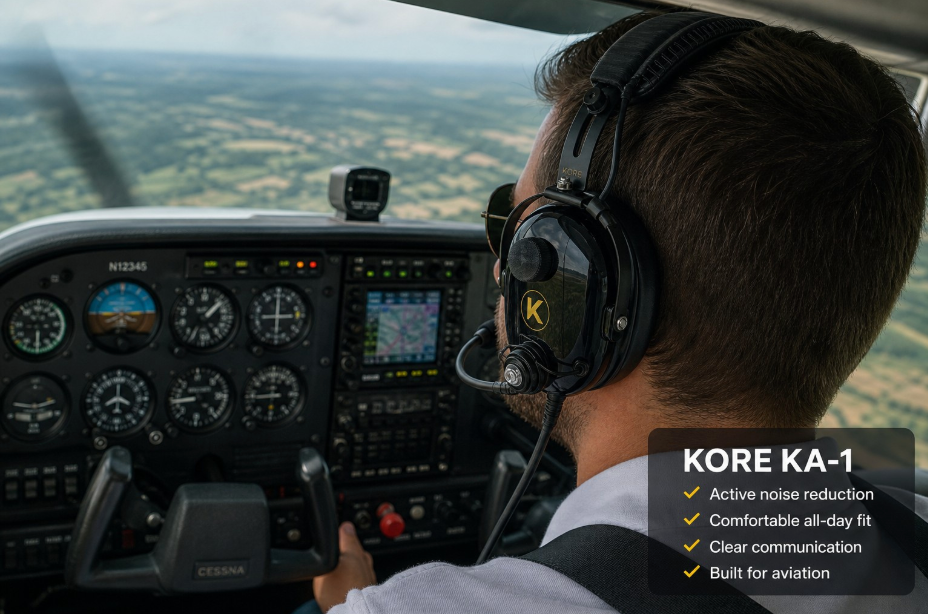
Over 30,000 pilots and more than 50 flight school partners trust KORE Aviation for their everyday flying needs. The KORE Aviation KA-1 is a prime example of accessible hearing safety. Priced at $224.95, it delivers a robust 24 dB of passive noise reduction, matching the attenuation of expensive units on the market. It features plush gel ear seals that mold around glasses frames to create a tight acoustic seal, dual GA plugs, and a reassuring 5-year warranty. If you want an even leaner option, the KORE Aviation P1 offers the same 24 dB noise reduction with a 1-year warranty for $124.95. Neither of these models relies on electronic active cancellation, meaning fewer points of failure and zero reliance on batteries for basic protection.

Shop the KORE Aviation KA-1 PNR Pilot Headset
Frequently Asked Questions About Cockpit Noise and Hearing Protection
1. Are cockpit noise levels dangerous in all aircraft?
Yes, even relatively quiet aircraft like modern jets produce noise levels that exceed safe limits over long periods, making hearing protection necessary for every flight.
2. What is the difference between PNR and ANR headsets?
PNR uses physical materials like acoustic foam and tight seals to block sound, while ANR uses electronic circuitry to cancel out low-frequency noise. Both reduce decibels, but PNR operates entirely without batteries.
3. How often should I replace my headset ear seals?
You should inspect your ear seals regularly. If they become stiff, cracked, or lose their seal around your glasses, replace them immediately to maintain proper noise reduction.
4. Can I wear eyeglasses with a pilot headset without losing noise reduction?
Yes, provided your headset uses gel ear seals that conform to the arms of your glasses. The KORE Aviation KA-1 includes gel ear seals designed specifically to maintain a tight acoustic seal around eyewear.
5. How do I know if my aviation headset is providing enough protection?
A properly fitted headset should noticeably muffle ambient room sound before you even plug it in. In flight, engine roar should sound distant and muted rather than sharp and fatiguing.
Bottom Line
High cockpit noise levels are more than an annoyance. Repeated exposure can contribute to hearing fatigue, tinnitus, and permanent noise induced hearing loss over time. For student pilots especially, protecting your hearing early is a smart habit because flight hours and noise exposure only increase as training continues. A properly fitted aviation headset helps reduce cockpit noise while keeping instructor and ATC communications clear. For pilots who want dependable protection without premium ANR pricing, the KORE Aviation KA-1 offers 24 dB of passive noise reduction, comfortable gel ear seals, and a 5 year warranty for $224.95. Whatever headset you choose, prioritize proper fit, a reliable acoustic seal, and consistent use on every flight. Your hearing is something you want to protect for your entire flying career.


